
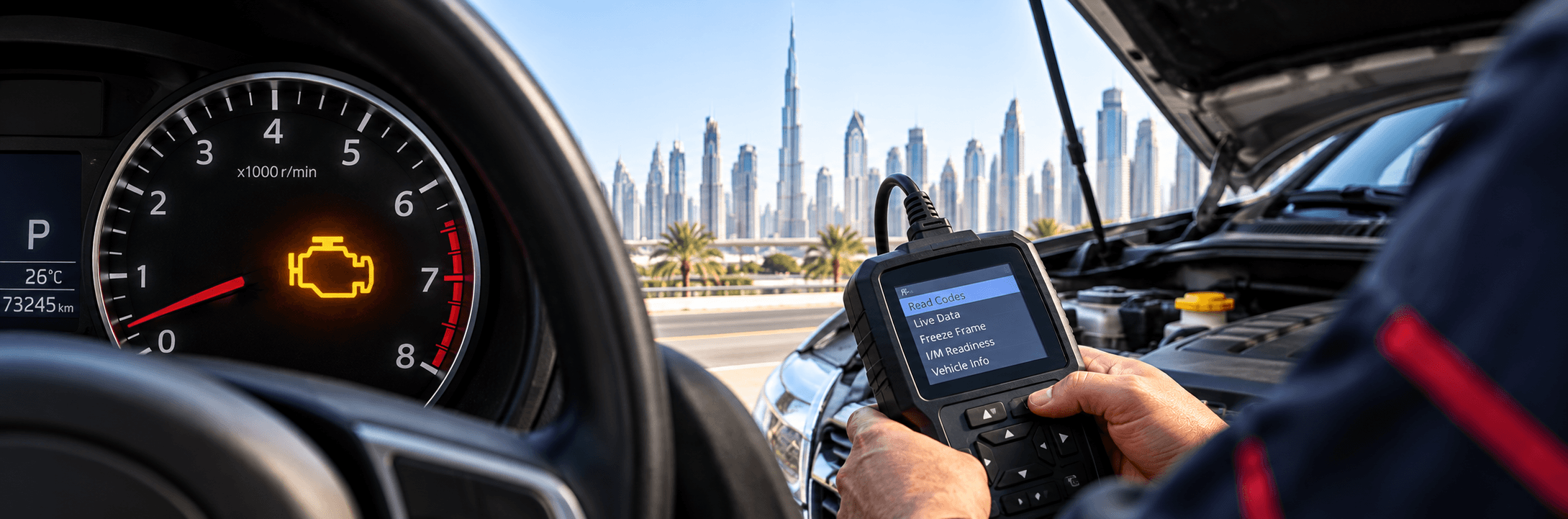
Common Causes And Solutions Of Engine Warning Light
There could be several reasons behind engine warning lights turning on, such as a loose fuel cap, faulty oxygen or MAF sensors, worn-out spark plugs, ignition coil failure, and even a catalytic converter. Steady lights suggest immediate diagnosis, whereas a flashing light might imply a significant misfire. A diagnostic scan will help to find the fault code before any part replacement takes place.
What should you do if the engine warning light appears in Dubai? Do not panic, but at the same time do not take it lightly and take timely action. Dial A Tire can help you with car diagnostics, assist in identifying any faults within the vehicle engine, and help you get the right solution.
What Does the Engine Warning Light Mean?
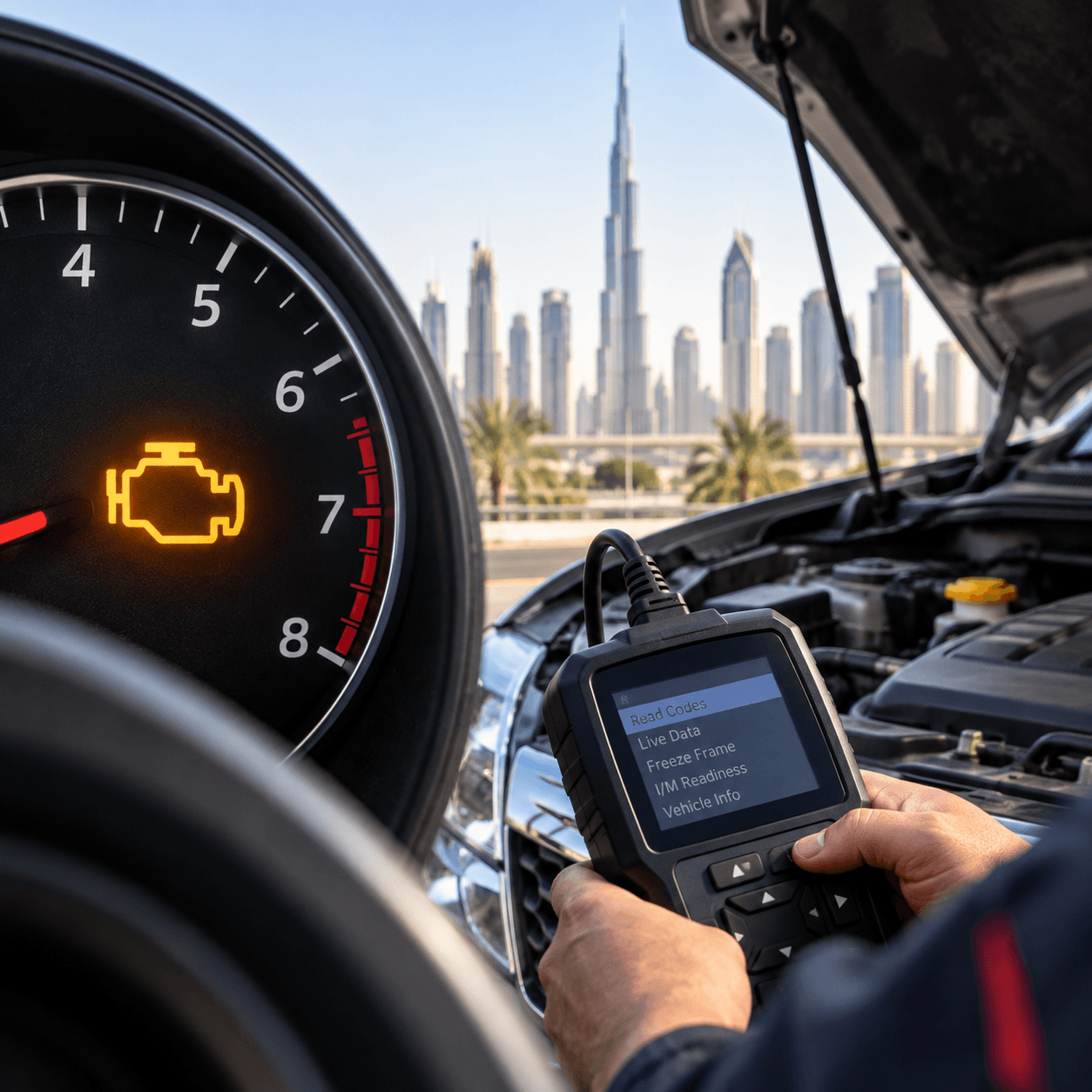
Your automobile's engine warning light forms a vital component of the car's onboard diagnostic system, constantly analyzing the status of the car's engine and emission system elements via sensors and electronics. If any fault is discovered, it will log diagnostic trouble codes and activate the warning light signal accordingly.
- Solid Engine Warning Light
A solid engine warning light indicates an existing problem that needs to be diagnosed. If your driving feels normal, arrange a professional diagnostic check as soon as possible.
- Flashing Engine Warning Light
A flashing engine warning light requires immediate action due to a potential misfire. According to EPA guidelines, severe engine misfires could lead to serious catalyst failure.
What Are the Common Causes and Solutions of Engine Warning Lights in Dubai?
An engine warning light can be triggered by issues ranging from a loose fuel cap to faulty sensors, ignition problems, or catalytic converter failure. A diagnostic scan can identify the stored fault code and help determine the right repair.
- Loose or Damaged Fuel Cap
Cause: A loose or damaged fuel cap can allow fuel vapors to escape and trigger the warning light.
Solution: Tighten or replace the cap. If the light stays on, get the vehicle diagnosed.
- Faulty Oxygen Sensor
Cause: A faulty oxygen sensor can affect the air-fuel mixture, fuel efficiency, emissions, and engine performance.
Solution: Test the sensor using diagnostic data before replacing it.
- Worn Spark Plugs or Ignition Coils
Cause: Worn spark plugs or faulty ignition coils can cause misfires, vibrations, hesitation, power loss, and poor fuel economy.
Solution: Inspect the ignition system and replace worn or defective components.
- Faulty Mass Airflow (MAF) Sensor
Cause: A faulty or dirty MAF sensor can affect the amount of air entering the engine, resulting in poor acceleration and fuel economy.
Solution: Inspect and test the sensor and wiring before cleaning or replacing the component.
- Failing Catalytic Converter
Cause: A damaged or inefficient catalytic converter can trigger the warning light and affect emissions. Persistent misfires can also cause catalytic converter damage.
Solution: Diagnose the catalytic converter and check for underlying issues before considering replacement.
Why Does Dubai's Climate Matter?
Dubai's extreme heat, dust, heavy A/C use, and stop-and-go traffic can place additional stress on vehicle systems and contribute to faults that may trigger an engine warning light.
- Extreme Heat : High temperatures can put additional strain on cooling systems, sensors, wiring, and other engine components.
- Heavy A/C Use : Frequent A/C use, particularly while idling in traffic, adds load to the engine and electrical system.
- Dust and Traffic : Dust can affect air intake components, while frequent stopping and acceleration place varying loads on the engine. Regular inspection can help identify developing problems early.
What Mistakes Should Drivers Avoid When the Engine Light Comes On?
An engine warning light should not be ignored. Delaying diagnosis or attempting repairs without identifying the underlying fault can make the problem more expensive to fix.
- Ignoring the Light
A warning light may indicate a minor or developing fault. Arrange a diagnostic check rather than assuming it will disappear.
- Driving With a Flashing Light
A flashing light can indicate a serious misfire and potential catalytic converter damage. Avoid unnecessary driving and seek professional assistance.
- Clearing the Warning Without Fixing the Problem
Resetting the warning light does not fix the underlying fault. The light may return once the vehicle detects the problem again.
- Replacing Parts Without Diagnosis
Several faults can trigger similar warnings. Proper diagnostic testing helps identify the actual cause before parts are replaced.
When Should You Call for Professional Help?
Seek professional help if the engine warning light appears with vibrations, smoke, overheating, power loss, or unusual noises. These signs may indicate a serious fault that needs immediate attention.
A diagnostic inspection can identify issues with the engine, sensors, ignition, emissions, or electrical system. If you also experience starting problems or dimming lights, a car battery service can check whether the battery or charging system is involved.
For a solid warning light, arrange a diagnostic check promptly. If the light is flashing or the vehicle shows serious symptoms, avoid unnecessary driving and seek professional assistance.
Conclusion
An engine warning light signals a potential vehicle fault, but it does not always indicate a major engine problem. A solid light needs timely diagnosis, while a flashing light requires immediate attention, especially if a misfire is suspected.
Regular maintenance, including car battery Dubai inspections when needed, can help prevent unexpected issues. If the warning light appears, rely on professional diagnostics rather than guessing or simply clearing the warning. Dial-A-Tire can help identify and fix the underlying problem.