

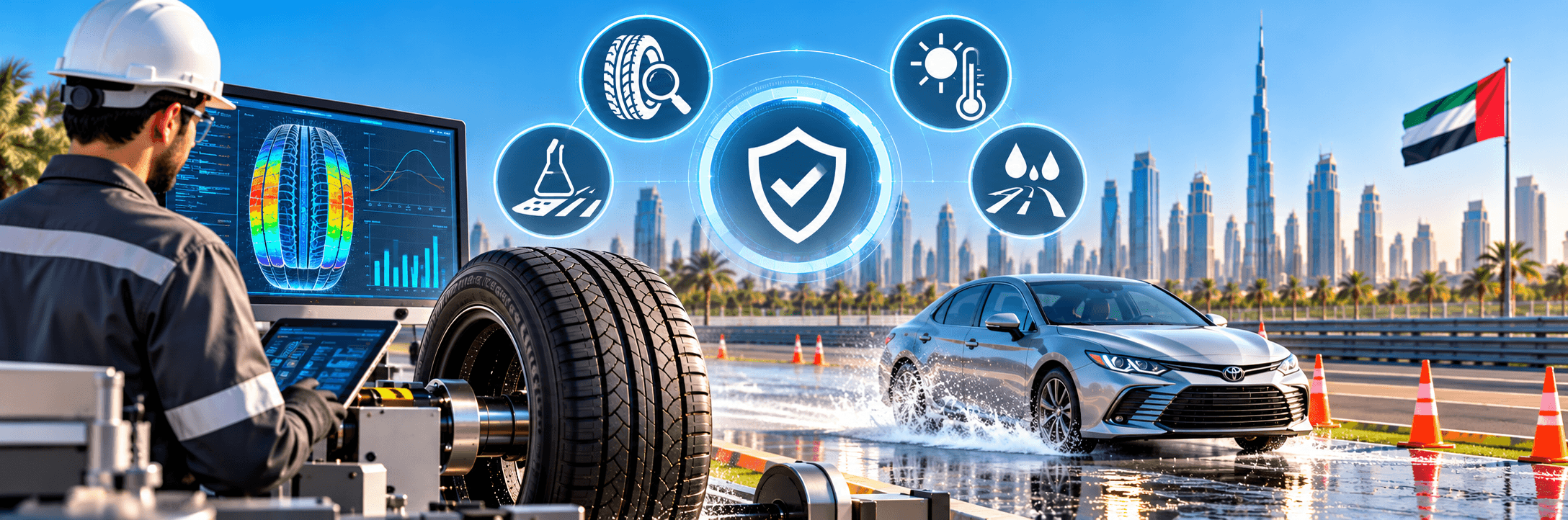
The future of tyre testing will likely combine laboratory testing, on-road data, and digital monitoring to assess tyre performance more comprehensively. These developments could help manufacturers improve tyre designs, give consumers clearer performance information and identify potential safety issues earlier, particularly under the UAE’s demanding driving conditions.
However, new technologies must complement effective regulation and responsible tyre maintenance, not replace them. Tyre testing assesses a tyre's braking, grip, durability, and load-carrying capacity. Rolling resistance measures how much energy a tyre dissipates while rolling, and wet grip measures how well the tyre can remain on a wet road.
These measurements help manufacturers and regulators assess tyre performance using defined criteria rather than relying on appearance or price alone.
How Is Tyre Testing Changing?
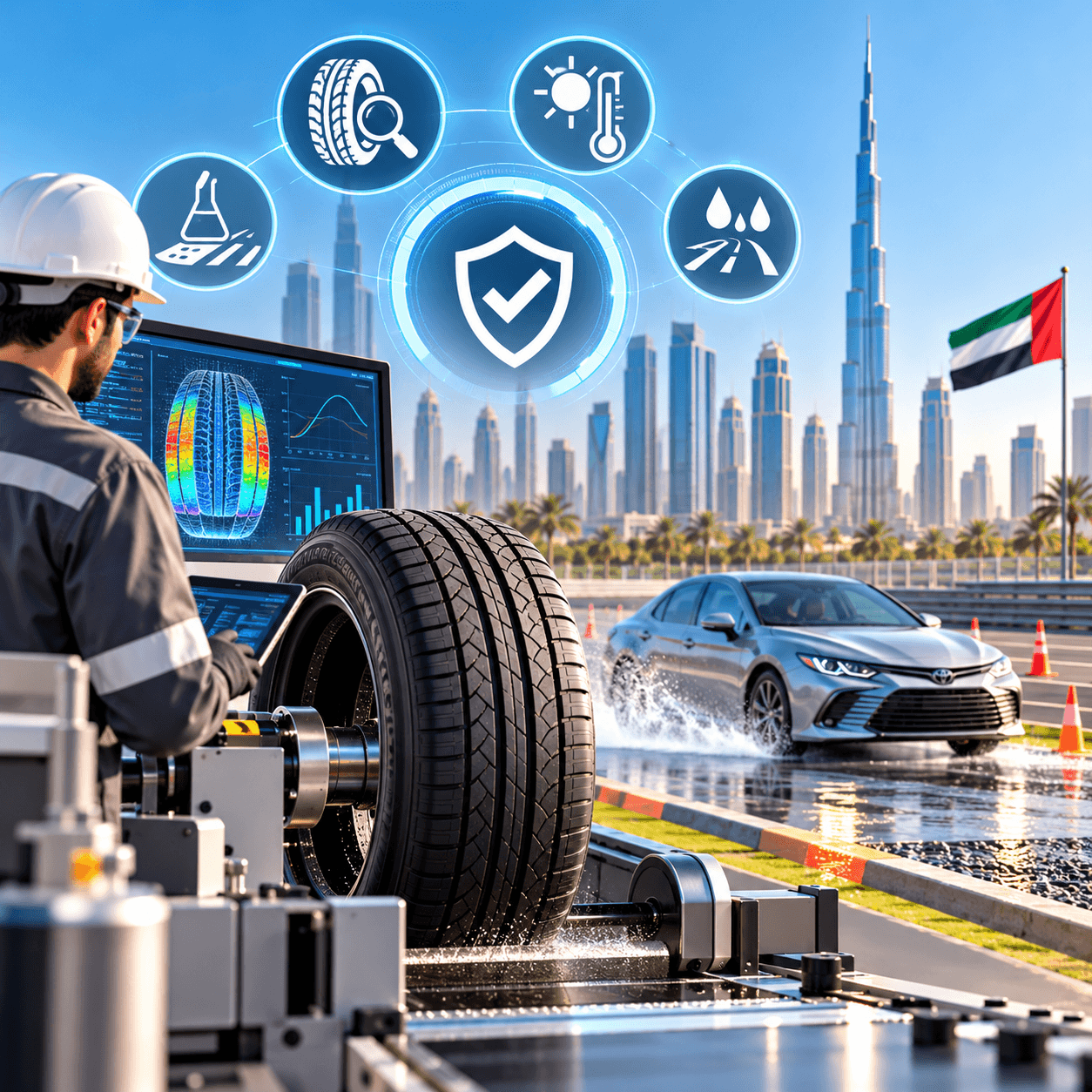
Conventional tyre testing relies on physical track tests and controlled laboratory tests. Manufacturers consider factors such as braking distance, handling, endurance, structural strength, and heat resistance. The tests remain valuable because they provide consistent results under specific conditions.
The next stage will likely combine physical testing with digital modelling, sensors, and data analysis. Computer simulations can help engineers evaluate tread patterns, rubber compounds and tyre structures before building physical prototypes. The most promising designs can then undergo controlled test-track trials.
This could reduce development time and assist manufacturers to compare more designs. However, simulations cannot replace all physical testing. Real road surfaces, vehicle loads, driving behaviour and temperature variations can reveal performance issues that digital models may not fully predict.
Which New Technologies Could Improve Tyre Safety?
Several developments are likely to influence how manufacturers evaluate tyres and how drivers monitor them.
- Digital Simulation and AI-Assisted Testing
Computer-aided engineering lets manufacturers model tyre deformation, heat generation, tread behaviour, and road contact. Artificial intelligence (AI) can analyse large volumes of test data, identify patterns and flag unusual results for further investigation.
These technologies could help engineers identify design weaknesses earlier and develop tyres suited to particular vehicle types, including SUVs and electric vehicles. However, AI predictions can be as accurate as are their training data and verification procedures. Physical tests and external conformance checks are necessary.
- Smart Tyres and Connected Sensors
A Tyre pressure monitoring system (TPMS) warns the driver when tyre pressure falls below the set limit. More advanced connected systems may also monitor factors such as tyre temperature, load, or wear, depending on the installed technology.
This data may help detect pressure loss or abnormal operating conditions before they worsen. Connected monitoring may also help fleet operators time inspections based on tyre condition rather than a fixed schedule. These features aren't available on all tyres, so drivers cannot assume all modern car tyres provide real-time information on wear or temperature.
- Testing for Electric Vehicles
EVs tyre raise new concerns for tyre design. Many EVs are heavier than comparable petrol or diesel vehicles because of their battery packs, and strong acceleration can increase tyre wear depending on driving style.
This means testing these features in combination, not focusing solely on low rolling resistance. A tyre with low energy loss must also meet the vehicle's load, braking, and handling needs.
What Do International Testing Standards Mean for the UAE?
International standards provide a useful foundation for assessing tyre performance. United Nations Regulation No. 117 addresses wet grip, rolling resistance, and rolling noise. The regulation sets out defined procedures for assessing these tyre characteristics, making performance evaluations more consistent and comparable.
The UAE has standards for passenger-car tyres, including UAE.S GSO 51, which covers tyre designation, dimensions, load capacities, and inflation pressures; GSO 52, which addresses general requirements; and GSO 53, which covers test methods. UAE legislation lists these standards. The applicable requirements and conformity procedures should be checked against the current regulations before making claims about a specific product.
Why Does Advanced Tyre Testing Matter in UAE Driving Conditions?
Car tyres in the UAE can face high ambient temperatures, hot road surfaces, long-distance driving, and heavy vehicle loads. These obstacles make heat management, proper inflation, structural integrity and load suitability especially crucial.
More advanced testing could help manufacturers assess how tyre compounds and structures respond to demanding operating conditions. It can also improve evaluations of performance and lifespan across different vehicle types. Nevertheless, lab tests cannot ensure that a tyre is resistant once it is either underinflated, overloaded, damaged or overly worn out.
Drivers are still advised to monitor cold tyre pressure against the vehicle manufacturer's recommendations, check tread and sidewalls, and replace tyres that can no longer be used safely. Technology can support these checks, but it cannot replace them.
Will Future Tyre Testing Change Tyre Replacement Decisions?
Potentially. Clearer performance data could help consumers compare wet grip, rolling resistance and noise, while fleet operators could use tyre records to identify recurring wear and plan inspections or replacements. The usefulness of these systems will depend on data quality, availability and how accurately the information reflects real operating conditions.
For individual car drivers, the priority is choosing a tyre that matches the car and meets the approved size, load index, and speed rating. A high score in one test does not outweigh the wrong fitment or an inappropriate tyre for the vehicle.
When buying tyres in the UAE, check the approved size, load index and speed rating rather than choosing by tyes brand, price or technology alone. If you are replacing only some tyres, check the condition and compatibility of the remaining set and follow the vehicle manufacturer's recommendations.
How Can Drivers Prepare for the Future of Tyre Safety?
Drivers do not need to wait for smart tyres or new regulations to benefit from better tyre safety. They can take practical steps now:
- Choose tyres that meet the vehicle manufacturer’s specifications.
- Buy from reputable suppliers and check applicable conformity information.
- Check tyre pressure regularly when the tyres are cold.
- Inspect tread wear, sidewalls and visible damage.
- Investigate repeated pressure loss, vibration or uneven wear.
- Replace tyres when they are damaged or no longer meet safe-use requirements.
As testing methods evolve, these basic practices will remain essential. Better technology may provide more detailed information, but safe tyre selection, regular inspection, and proper maintenance will still depend on drivers acting on that information.
Conclusion
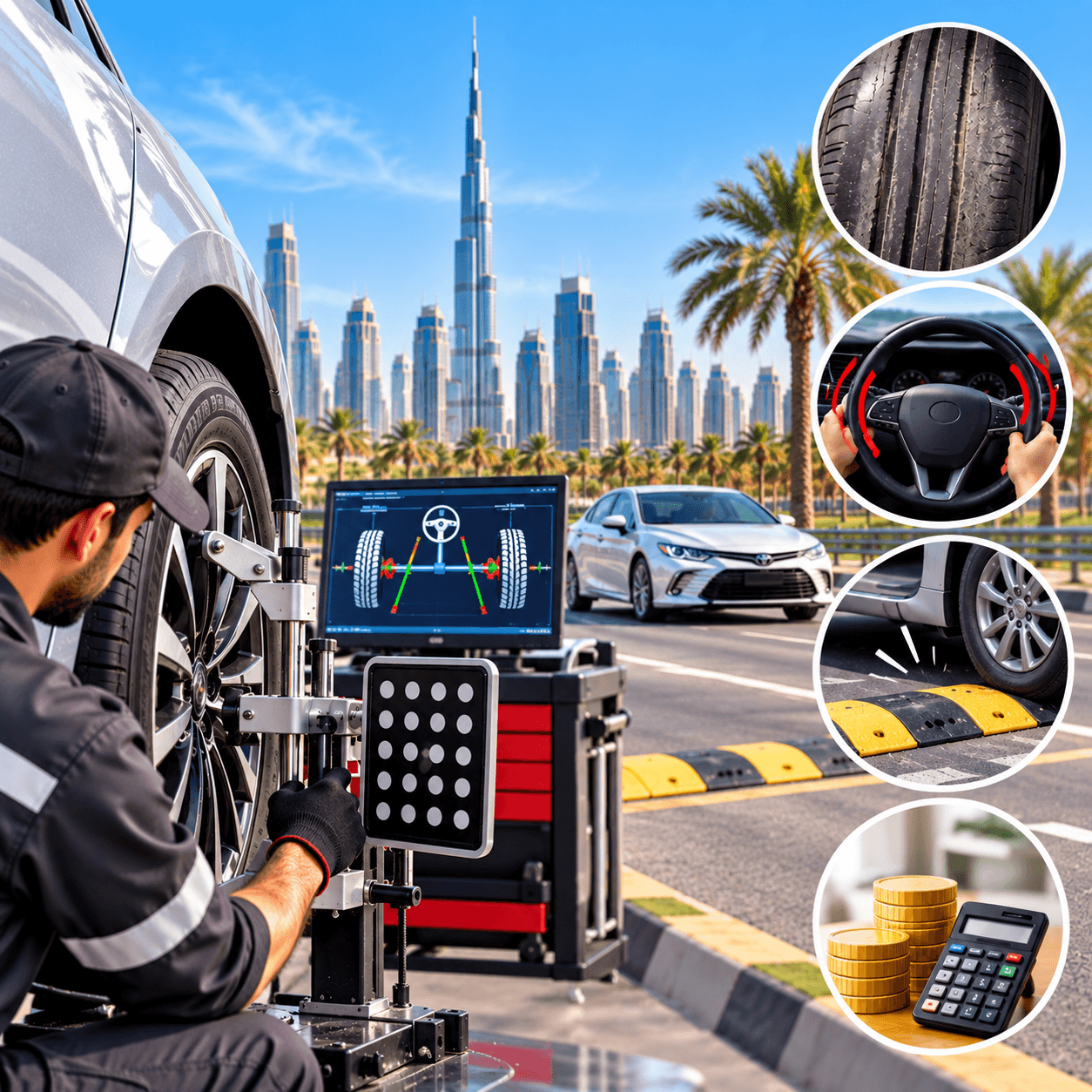
Choosing the right tyres starts with checking your vehicle’s approved specifications and comparing suitable options from reliable suppliers. Dial-A-Tire lets UAE drivers browse tyres by size, vehicle or brand and offers fitting through its service centres and mobile van service, subject to availability. Its services also include wheel balancing, alignment and tyre rotation.
Visit Dial-A-Tire to explore the available tyre range and arrange fitting. Confirm the correct specifications and service availability before ordering so your chosen tyres suit your vehicle and driving needs.