
Inner Edge Tyre Wear: What It Can Tell You About Alignment, Suspension and Tyre Pressure
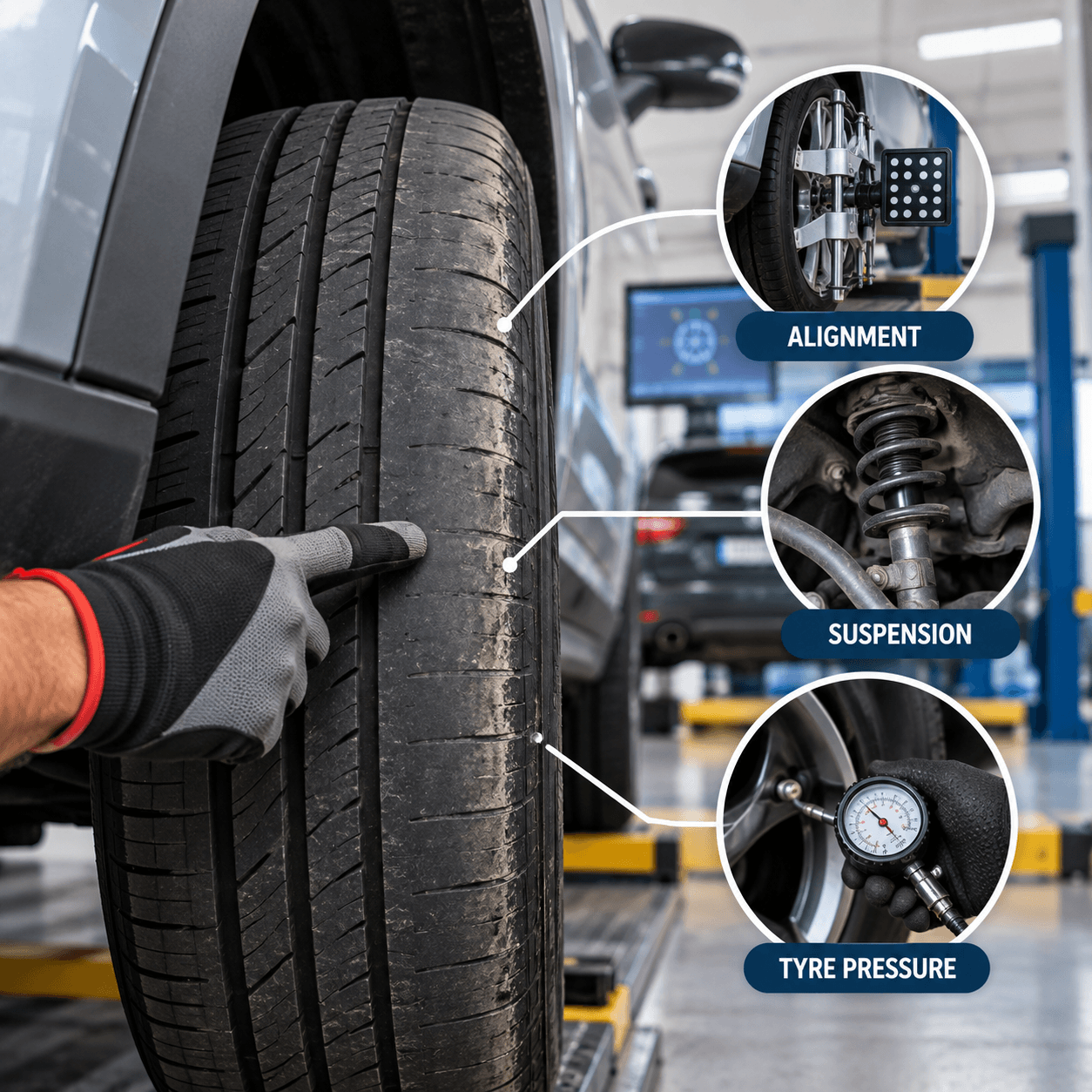
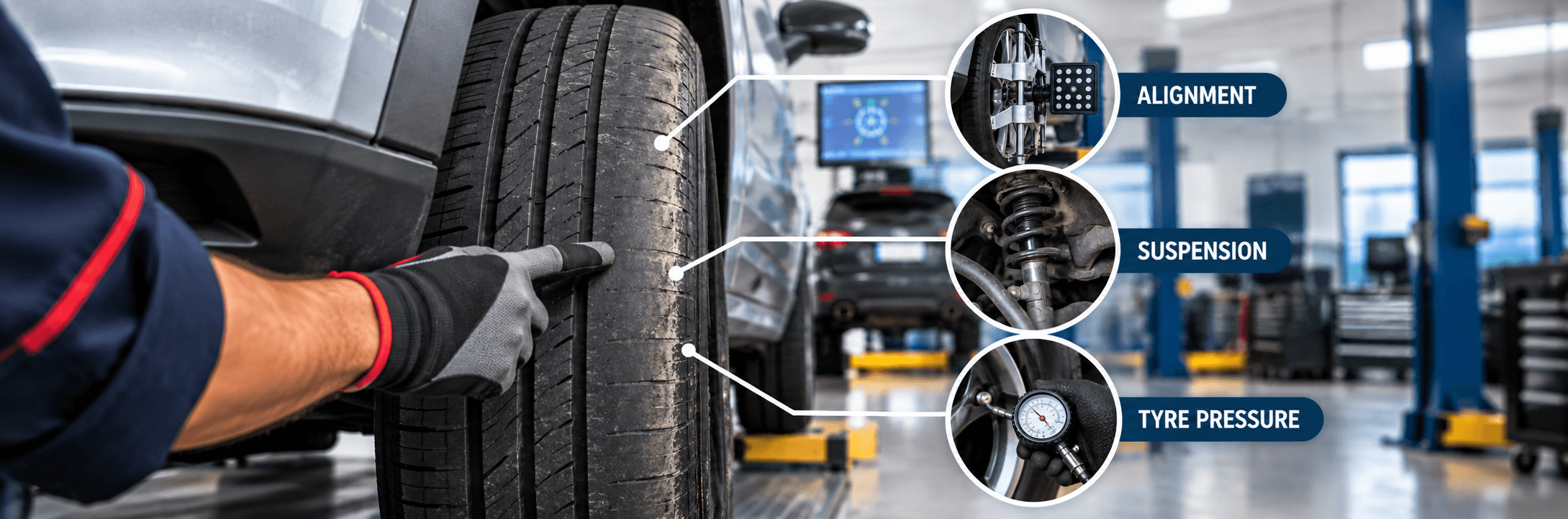
Inner edge tyre wear can indicate excessive negative camber, incorrect toe alignment, or worn suspension components. A professional inspection is needed to identify the exact cause.
Your car tires are one of the best indicators of what is happening underneath your vehicle. Although tread wear is normal and happens over time, uneven wear can reveal bigger problems with wheel alignment, suspension, and tire pressure.
One particularly important pattern is inner edge wear, which wears significantly faster than the outer or center edge. If you ignore this tire wear, it can affect your tire’s lifespan and performance.
So it's important to understand what inner-edge tire wear means and how to identify it so you can get it rectified.
What Is Inner Edge Tyre Wear And How Can It Affect Your Vehicle?
Inner edge tire wear refers to the uneven wearing of the tire’s tread, predominantly on the inner sidewall or edge. This wear affects the inner part of the tire, causing it to wear faster than the rest.
This compromises tire performance and reduces lifespan. When the inner tire edge wears faster, it can indicate a suspension or alignment problem that may cause instability while driving. Uneven wear can negatively affect your vehicle’s traction, handling, and braking efficiency, posing safety risks.
That is why you need regular car service to identify and fix inner tire edge wear and maintain optimal driving conditions.
What Causes Inner Edge Tyre Wear?
Tires generally wear because of three mechanical forces: angle, load, and movement. If your vehicle runs smoothly, these forces distribute evenly, and the tread wears down flat across its width.
If anything changes, the wear pattern changes too. For inner edge tire wear, there are three main causes:
- Incorrect Wheel Alignment
Caster, camber, and toe are set during your vehicle’s wheel alignment Dubai. If any of these are set outside the manufacturer’s recommended specifications, the tire meets the road at an incorrect angle, causing the inner edge to wear unevenly.
- Worn Or Loose Steering And Suspension Components
Ball joints, bushes, shock absorbers, and tie rod ends hold the alignment angles steady while your car is moving. If these steering or suspension components are loose or worn out, the angle starts to shift under load.
As you drive and hit a bump or turn, the wheel shifts out of spec, causing inner-edge damage and wear.
- Incorrect Tyre Pressure and Other Driving Conditions
Incorrect tyre pressure can accelerate uneven tyre wear. Underinflation typically increases wear on both shoulders, while overinflation can cause excessive wear across the centre of the tread. Heavy loads and aggressive driving can further accelerate existing wear patterns.
What Does Your Tyre Wear Pattern Tell You About The Problem?
Different tire wear patterns can indicate different problems in your vehicle. Here are some patterns that you should keep a watch on:
- Center wear - This wears down the middle of the tire and indicates that the tire is over-inflated, causing the center to carry most of your vehicle’s weight.
- Shoulder or edge wear - Wear on just one side or both outer edges means you take corners too fast or your tire is under-inflated. If the wear is only one outer edge, it indicates an alignment or camber issue.
- Scalloping or cupping - Dip-like, wavy spots on the tire’s tread mean the vehicle’s struts, shocks, or suspension parts are worn out, causing the tire to bounce.
- Feathering - Tread blocks that feel smooth in one direction and sharp in the other direction indicate that toe alignment is inaccurate and is scrubbing the tire’s rubber sideways.
How Can You Check For Inner Edge Tyre Wear?
Checking the tyre’s inner edge wear means inspecting the innermost side of the tread that faces your car’s body. Here are some steps to check the same:
- Park and turn your front steering wheel all the way to one side so that you can see the inner tread of the front tires.
- Look behind the tire or run your fingertips along the inner tire rib. Check for bald spots, smoothness, or feathered, sharp edges.
If you can't check it yourself, visit a service center in Dubai to have it checked.
When Should You Replace Your Tyres?
The signs listed below are clear indicators that it is time to get your car tyre change:
- If the tread reaches or goes below the legal minimum depth of 1.6 mm.
- If you notice exposed bulges, cords, deep cracks, blisters, or severe irregular wear.
- If the tires are nearing or exceeding their recommended age limit of 5 years in Dubai, regardless of the tread pattern or its condition.
Why Choose Dial-A-Tire To Fix Your Inner Edge Tyre Wear?
Inner-edge tire wear can quickly reduce your car’s tire lifespan. If you notice signs of inner edge wear, contact Dial-A-Tire. We offer mobile tire repair Dubai, and you can book us for a wheel alignment check to rule out inner-edge wear.
Our technicians will inspect the suspension components, particularly the ball joints and bushings. We will also correct the toe and camber angles and adjust them per the manufacturer’s recommendations.
Conclusion
Inner-edge tire wear is not only a tire issue but also an alignment or suspension problem. So, if you get a tyre replacement service without fixing the alignment, your new tires will wear the same way.
The best approach is to detect the issue early, fix it, and save money in the long run. Contact Dial-A-Tire to have your vehicle and tires checked, and our experts will offer honest advice on whether the tire can be fixed or must be replaced.