
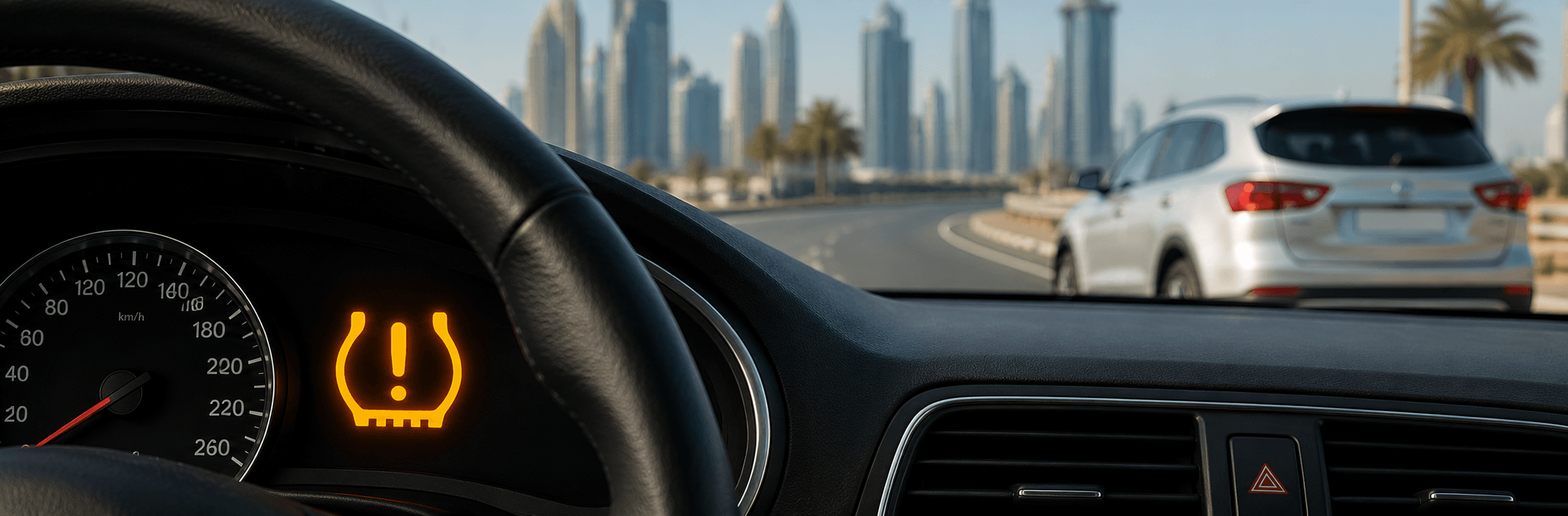
What should you do when the TPMS Warning Light shows up on your dashboard?
If the TPMS warning light comes on, slow down your vehicle safely, perform a visual inspection of the tires, check the tire pressure using a gauge, and fix the problem of tire pressure quickly. If the TPMS light is not going off or blinking, you will need to take your vehicle to the mechanic, as it can mean a tire pressure problem or a malfunctioning tire pressure sensor.
TPMS warning light is a sign that your tyres need some attention urgently, otherwise you might face issues like poor control, rapid wear of your tyres, high fuel consumption, and even a tyre blow-out, especially if you are in the UAE's extreme weather conditions.
In this guide, you'll learn what the TPMS warning light means, what causes it to turn on, the immediate steps you should take, how to reset it, and when it's time to visit a trusted tyre shop Dubai for professional tyre repair and car service.
What Does the TPMS Warning Light Mean?
TPMS warning light is a light on the dashboard indicating that there are issues with your tyre pressure or tyre pressure monitoring system.
- What Does a Solid TPMS Warning Light Mean?
A solid TPMS light can indicate that one or more tyres have low pressure because of a puncture, air loss, or wrong pressure settings.
- What Does a Flashing TPMS Warning Light Mean?
Flashing TPMS warning lights indicate an issue with the tyre pressure monitoring system, but not necessarily the tyres, since the reason may be malfunctioning sensors or dead sensor batteries.
Why Does the TPMS Warning Light Come On in the UAE?
There could be a number of reasons for activation of TPMS warning lights, early identification of the problem allows preventing tyre damage and improving road safety.
- Tyre Pressure Fluctuation : The high temperatures common in the UAE can lead to fluctuations in tyre pressure throughout the day.
- Puncture Triggers the TPMS Warning : A nail, screw, or any other sharp object can trigger an air leak from the tyre.
- Incorrect tyre pressure causes the Warning Light : Overinflated or underinflated tyres will activate TPMS, which will have an effect on handling, driving safety, and tyre wear.
- Faulty TPMS Sensor : A malfunctioning sensor, a weak car battery in the sensor, or miscommunication in the tyre pressure monitoring system can lead to flickering TPMS lights.
What Should You Do Immediately When the TPMS Warning Light Comes On?
You should take immediate action when the TPMS warning light turns on in order to guarantee your own and other people safety.
- Reduce Speed If Necessary.
Do not brake abruptly, avoid fast corners and sharp turns because tyres with low pressure cannot provide stability for your car.
- Find A Safe Place To Stop.
You need to find a suitable place to park your car at the fuel station or in the parking lot in order to check your tyres properly.
- Visually Inspect All Tyres.
Check all your tyres and find those ones that look deflated or damaged somehow.
- Measure Tyre Pressure With A Gauge.
Use the appropriate gauge because tyres can be severely deflated without a noticeable sign.
- Inflate Or Deflate Tyres To The Recommended Pressure.
Adjust all the tyres in accordance with the recommended pressure indicated on the sticker located on the driver’s door.
- Look For Punctures Or Visible Damage.
Look for any signs of nails, cuts, cracks, bulges, or other embedded objects that can cause a drop in tyre pressure.
- Drive Cautiously And See If The Warning Clears.
Most of the vehicles automatically turn off the system when you drive for some time with the right tyre pressure.
- Visit A Tyre Professional If The Warning Remains.
When the TPMS warning light stays on or flashes, visit services like Dial A Tire for professional inspection and tyre repair Dubai.
Can You Drive with the TPMS Warning Light On?
To find out if it's safe to drive with TPMS light on or not, let check these two scenarios:
- When It May Be Safe to Continue Driving
If the car behaves normally, there are no obvious problems with your tires, and the loss of air pressure is slight, you may safely drive slowly.
- When You Should Stop Driving Immediately
It is essential to stop immediately if there are visual signs of your tire being flat, strong pulling to one side of the road, problems with steering, poor braking, or loud thumping sounds.
How Do You Reset the TPMS Warning Light?
In most cases, TPMS warning light resets automatically. Here is how:
- Inflate tires : Use a pressure gauge to measure and inflate your tires correctly.
- Drive the Car : A lot of cars have an automatic TPMS calibration procedure within about 10 to 20 minutes after driving.
- Use TPMS Reset Button : Some cars have a TPMS reset button for reprogramming the system.
- TPMS Relearning Upon Tyre Change : You might need to conduct TPMS re-learning procedure in order to adjust new sensors' positions.
- TPMS Programming by Professionals : At times, you might need professional TPMS diagnostic tool in order to program/reprogram/change your tyre pressure sensors.
How Can You Prevent TPMS Warnings in the UAE?
These simple maintenance tipse can help reduce the chances of seeing the TPMS warning light:
- Use a good pressure gauge and check the car tyre pressure every month, always when tyres are cold.
- Check the pressure of your tyres before going on a trip.
- Tyres should be rotated every 8,000 to 10,000 km.
- Wheel alignment will prevent tyres from wearing unevenly and ensure that driving is comfortable.
- Inspection of tyres can help in identifying issues early enough before costly repairs.
- TPMS sensors need to be replaced once in a while due to the fact that their batteries expire after some time.
If your TPMS warning light stays on after adjusting your tyre pressure, don't ignore it. Dial A Tire provides professional tyre inspections, tyre repair, TPMS diagnostics, and car service across Dubai to help keep your vehicle safe and roadworthy.