
Are you curious about how curb rash is prevented and how rim protectors function? This guide simplifies it.
Why Alloy Wheels Get Damaged So Easily
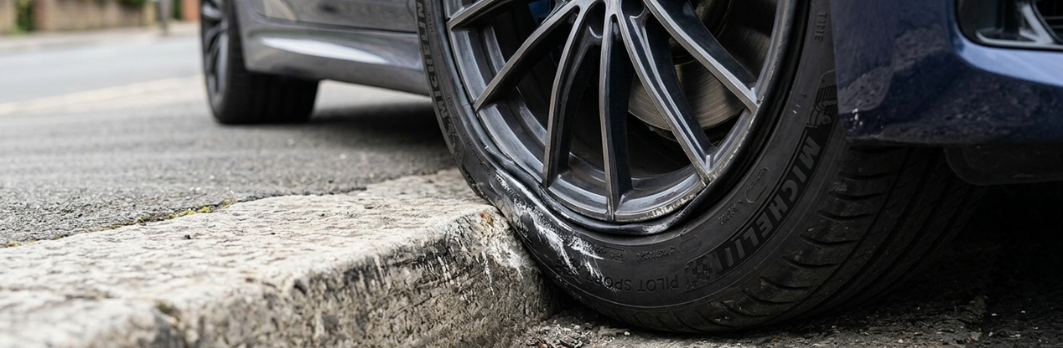
Alloy wheels are built to perform and to look good, not to impact.
- Edges are close to the sidewall of the tyres.
- Low-profile tyres do not provide much protection.
- Parking close to curbs is risky due to contact.
- City car driving is a matter of confines.
A simple collision with a curb can result in apparent damage.
What Are Rim Protectors?
Rim protectors are protective strips that are fitted on the outer edge of your alloy wheels.
They are an obstacle between the following:
- The wheel rim
- Surfaces of outside objects (curbs, edges, obstacles)
The protector absorbs the impact of your alloy instead of it.
How Do Rim Protectors Work?
It is not difficult to know how rim protectors work.
- Impact Absorption: The protector absorbs the contact of your wheel when it contacts a curb, executing the damage to the alloy directly.
- Shock Distribution: The force is not concentrated on the metal but on the protector material.
- Surface Barrier: They produce a physical coating that inhibits scratches and chips.
- Replaceable Protection: Protectors can be easily substituted in case they are damaged unlike alloys.
Types of Rim Protectors Available
The type of rim protector you want will depend on the level of protection you need and how you drive. All of them have varying degrees of durability, installation, and the extent to which they protect an alloy wheel, particularly in curb rash prevention.
-
Adhesive Rim Protectors
Adhesive rim protectors are soft strips that are attached directly to the outer rim of alloy wheels. They give the most basic protection against light scratches and light contact with curbs. They are simple to install and affordable and are the most widely used in everyday driving conditions.
Best for:
- Daily city driving
- Budget-friendly protection
- Light curb contact
-
Clip-On Rim Protectors
The rim protectors are attached to the rim by inserting the clip-on rim protector, which forms a secure, durable protective layer between the rim and the tyre. They are more resistant to impacts than adhesive types and are intended for long-term use without frequent replacement.
Best for:
- Premium vehicles
- High-risk urban driving
- Long-term protection
-
Full Rim Cover Protectors
Full rim cover protectors provide all-around coverage of the rim edge, offering greater protection against scratches and curb hits. They provide better protection than simple strips and can be used to secure costly alloy wheels.
Best for:
- Maximum protection needs
- Luxury alloy wheels
- Frequent curb exposure
-
Metal or Hard Shell Protectors
These are hardened materials such as aluminium or reinforced composites. They are superior in impact resistance and durability; hence, they can be used in high-performance cars. They should, however, be installed accurately in order to be effective.
Best for:
- Performance cars
- High-speed driving
- Premium setups
-
Protective Coatings
Protective coating refers to liquid solutions that are applied to the rim surface to form a thin protective layer. They are resistant to small scratches, dirt, and corrosion, but not impact-absorbing. Ideally, as a supplementary protection measure, and not as a primary protection measure.
Best for:
- Surface protection
- Aesthetic maintenance
- Light usage conditions
Benefits of Using Rim Protectors
Rim protectors are a minor addition, yet they are of great value for protecting your wheels. They can serve as a convenient way to protect alloy wheels in the long term, especially in conditions where curb contact is frequent.
-
Prevents Curb Rash
Rim protectors are the first point of contact between a wheel and a curb. Rather than the protector being scratched or chipped, the impact is absorbed by the protector, making it highly effective at preventing curb rash.
-
Reduces Repair Costs
Repairs to alloy wheels are also costly and may require professional refinishing. Rim protectors are a cheaper way to avoid these recurring expenses, as they prevent initial damage and are therefore cost-efficient in the long term.
-
Maintains Wheel Appearance
Scratched or chipped alloys will diminish your car's overall appearance. Rim protectors can help keep your wheels clean and free of damage, maintaining the high-end look of your car.
-
Easy to Replace
Rim protectors are less expensive than alloy wheels because they can be replaced. In case they are damaged, you can easily replace the protector rather than repairing or replacing the whole wheel.
-
Adds an Extra Layer of Protection
They provide cushioning protection for your wheel and the environment, minimizing direct contact with curbs, road borders, and objects on the road in everyday driving.
-
Improves Resale Value
Properly taken care of wheels enhance the general worth of your car. The rim protectors maintain the condition of the wheels, which leads to increased resale.
-
Suitable for Everyday Driving
Rim protectors have a consistent level of protection when it comes to parking in tight spots or even on roads in the city and do not interfere with the performance in driving.
How Durable Are Rim Protectors?
Durability depends on:
- Material quality
- Installation
- Driving conditions
High-quality protectors:
- Last long under normal use
- Withstand minor impacts
- Can be replaced when needed
How to Choose the Right Rim Protectors
The selection of rim protectors is not a matter of picking any product: it is a matter of matching the level of protection to the situation on the road and the type of wheel. The correct option will provide efficient alloy wheel protection without hindering durability or fitting.
-
Reflect on Your Driving Conditions
When you have to park in small spaces or in the city where there is heavy traffic, you will require more resistance. Simple options suffice for light use. The amount of curb rash prevention you require should be determined by your exposure to curbs and obstacles.
-
Check Material Quality
The success of rim protectors depends largely on the material. The quality of materials used for impact absorption and durability is better and longer-lasting, whereas low-quality materials wear easily and do not even provide protection.
-
Select the Right Type
Adhesive, clip-on, and full-cover are used for different purposes. Select based on the required level of protection, rather than convenience or cost.
-
Ensure Proper Fit and Size
Rim protectors should be the same size as your wheels. Poor sizing will reduce functionality and can cause adhesion or fit issues.
-
Prioritize Installation Quality
Even the most effective protectors will not work when incorrectly placed. Professional installation guarantees the alignment, safe fit, and durability.
-
Balance Price with Value
Lower-priced alternatives might only save money in the short run but may not be as durable or effective for protection. Quality investment will make it more durable and less likely to be replaced.
-
Consider Aesthetic Preference
Some rim protectors also enhance the look of your wheels. When you need to look good, make sure that you select designs that match your car but at the same time provide protection.
Maintenance Tips for Rim Protectors
Rim protectors are silent workers, but only when well cared for. Routine maintenance means they always provide good alloy wheel protection and will not cause grip loss, wear, or loss of appearance over time.
-
Clean Them Regularly
The rim is covered with dirt, brake dust and road grime. Frequent washing helps prevent material degradation and ensures that the protectors are well-fixed and the wheels' overall appearance does not change.
-
Check for Wear and Damage
Rim protectors cushion the impact. Hence, cuts, peeling, or dents may be observed in the rim protectors over time. Regularly inspect them and replace worn-out parts to ensure effective curb rash prevention.
-
Ensure Proper Adhesion or Fit
For adhesive types, check whether the edges are lifting. For clip-on ones, make sure they are firmly fastened. Protectors can be loose and decrease efficacy and could fall out on the road.
-
Avoid Harsh Chemicals
Powerful cleaning chemicals may also weaken adhesives or damage the material. Use soft cleaners to maintain the finish and durability.
-
Replace When Necessary
Rim protectors are made to be interchangeable. If they have already been hit by more than one impact or show visible wear, it is better to replace them than to attempt to prolong their life.
-
Inspect After Impact
When your wheel comes into contact with a curb, it is always important to check on the protector. Although the alloy might appear safe, the protector may have sustained some damage and require replacement.
If you are looking for fast and most reliable rim repair service, Dial A Tire is the best choice with the most affordable service to the rescue.