
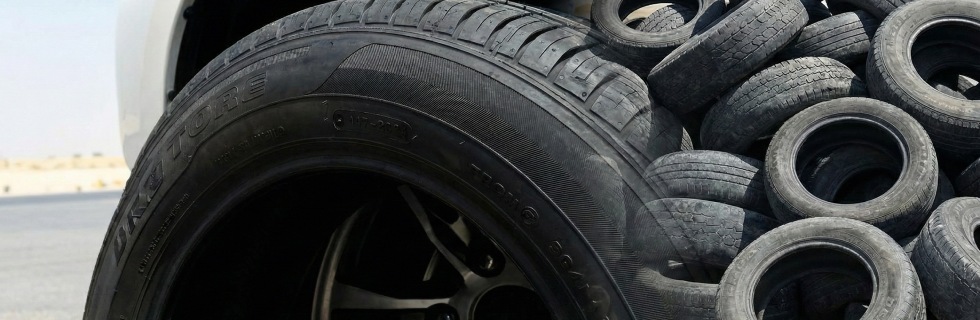
Many drivers assume that a tyre is safe as long as it looks new. In the UAE, that assumption can be costly and dangerous. Due to extreme heat and high-speed driving conditions, tyres UAE are legally allowed on the road for only five years from their manufacturing date.
The UAE government has introduced strict tyre regulations that cover age, condition and overall suitability for local driving. Even unused tyres can become unsafe over time, which is why strict tyre age regulations exist to protect drivers and reduce accident risks.
In this guide, we explain the 5-year tyre rule, and how Dial-A-Tire makes it easy to stay legal and worry-free.
What Is the 5-Year Tyre Rule in the UAE?
The UAE law says you cannot use tyres in UAE that were made more than five years ago. It doesn't matter if the tread looks perfect or if the car was never driven. Once those sixty months pass then the tyre is legally "expired."
There is a big difference between the day a tyre was made and the day it was put on your car. The 5-year clock starts the moment the tyre leaves the factory. UAE traffic authorities, like the RTA, check this during your annual vehicle registration.
This strict oversight ensures that every tyre for car use on the road meets a high safety standard
Why the UAE Enforces Strict Tyre Age Laws?
Driving in the UAE puts constant strain on car tyres with extreme summer heat lasting for months, busy roads throughout the day and highways that demand steady high speeds.
Under these conditions, ageing tires wear down much faster. The older rubber loses strength, struggles to handle heat and becomes more likely to fail without warning.
This is why the UAE traffic authorities apply strict tyre rules that focus purely on safety and control rather than trends or sales. Allowing older tyres would sharply increase the risk of high-speed accidents caused by weak structures and sudden blowouts.
How Tyre Age Is Calculated?
The first two digits of the numbers show the manufacturing week of the tyre and the last two digits show the year. This means if the numbers read 2421 then the tyre was produced in the 24th week of 2021 and should be replaced by mid-2026 under the five-year rule.
Key Regulations and Compliance For Tyres in the UAE
To keep your car legal and safe, there are several other standards you must meet in the UAE. These rules cover everything from how the tyre looks to how it was stored before you bought it.
1. Minimum Legal Tread Depth
In the UAE, the legal minimum tread depth for light vehicles is 1.6 mm. If your tread is shallower than this then you are at risk of losing control especially if there is a rare rainstorm or sand on the road. Most experts suggest looking to buy tyres once you hit 3 mm just to be safe.
2. Matching Tyres Required
All your tyres should be the same size, type and ideally the same brand. Having different grip levels on different wheels mess with your braking and handling which is a major safety concern.
3. No Used Or Retreaded Tyres
Drivers sometimes buy second-hand tyres to save money. In the UAE, this is strictly forbidden for passenger cars. Drivers are not allowed to use retreaded tyres in which a new tread is glued onto an old frame. Only brand-new rubber is allowed for your personal vehicle.
4. Heat-Resistant Tyres Only
Not all tyres are built for the desert and when you buy new tyres then you should check the temperature rating. It should be either Class A or Class B which are designed to withstand the extreme heat of the UAE without melting or breaking down prematurely.
5. Approved Labelling & Certification
Each tyre must carry proper marks showing compliance with approved standards. Every tyre sold in the UAE must have an ESMA (Emirates Authority for Standardization and Metrology) sticker or an RFID tag.
This proves the tyre has been tested and approved for use in local conditions. Missing or unclear labels often lead to rejection during checks.
6. Tyre Storage & Sales Rules
When you go to buy tyres then always check the date code. Even if it is never been on a car then a tyre that has been in a warehouse for three years only has two years of legal life left for you.
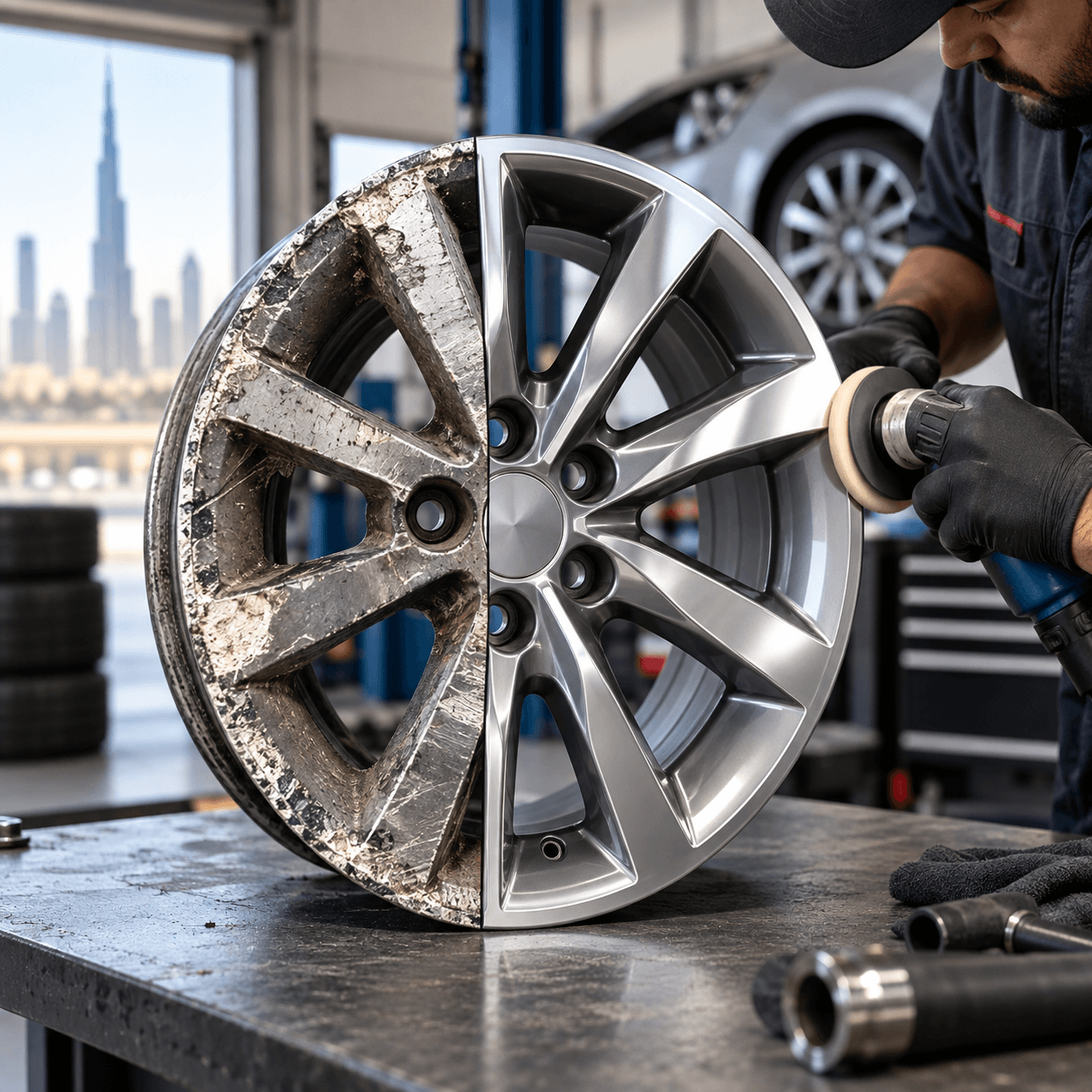
7. Replace Damaged Tyres Immediately
Cuts, bulges or cracks on a tyre are clear warning signs and driving with visible damage greatly increases the risk of a blowout especially at highway speeds.
Even if the tyre is within age limits and has enough tread then hitting a curb or noticing a sidewall cut means it is no longer safe. The traffic police will issue fines if such damage is spotted during a random check.
8. Penalties For Non-Compliance
Drivers face fines, inspection failure or insurance trouble when rules are ignored. If you are caught with expired or unfit tyres then you could face a huge fine and your vehicle might even be impounded.
Why Are “Unused” Old Tyres Illegal?
Rubber is a biological and chemical product which changes over time regardless of whether it’s rolling down a road or sitting on a shelf. Many drivers believe unused tyres remain safe forever and this may cause serious mistakes. Time affects tyres even without road contact.
1. Rubber Degradation
Rubber is made of long molecular chains and changes as it ages. Over time, oxygen and heat cause these chains to break down, Oils dry out and the surface hardens.
This process is called oxidation which happens from the inside out. Heat and air speed up this process especially in the UAE. Even if the outside looks shiny and black but the internal structure might be crumbling.
2. Loss Of Elasticity
A good tyre needs to be flexible so it can grip the road and absorb bumps. As it ages, it loses its natural oils and becomes stiff which is called dry rot. Brittle rubber can’t handle the pressure of high speeds or the expansion caused by heat which leads to cracks.
3. Increased Accident Risk
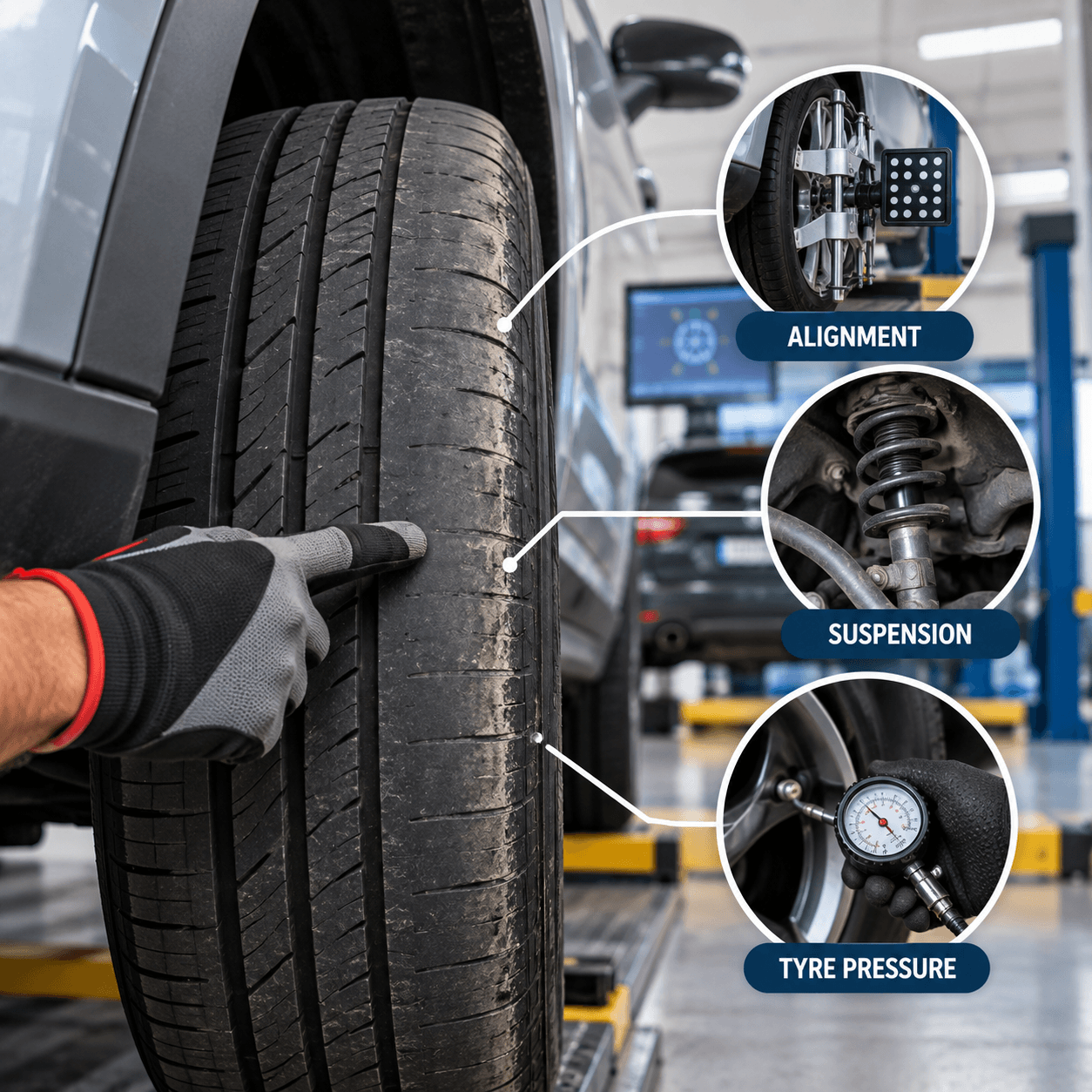
Ageing tyres crack more easily and respond poorly during braking. Your stopping distance gets longer and your chance of skidding increases.
The biggest danger is a tread separation where the outer layer of the tyre literally peels off while you are driving. This almost always leads to a loss of control and increases the risk of an accident.
Conclusion
The 5-year rule is there for a reason and following it ensures that your journey remains smooth and your family stays protected. While the rules might seem strict, they are the reason why the UAE has such high standards for road safety.
Checking dates and measuring tread depth isn't everyone's favorite weekend activity.
At Dial A Tire, we take the guesswork out of the process and provide high-quality tyres in UAE that are new, ESMA-certified and perfectly suited for the local climate. Our experts help you find the best car tyres deal without compromising your safety.
FAQs
In the UAE, tyres are legally allowed for use only up to 5 years from their manufacturing date, regardless of whether they are used or unused.
Yes, even unused tyres become illegal after 5 years because rubber degrades over time due to heat and oxidation.
Check the DOT code on the tyre sidewall. The last four digits indicate the manufacturing week and year (e.g., 2421 means week 24 of 2021).
Driving with expired tyres can result in fines, vehicle inspection failure, and possible impoundment under UAE regulations.
Due to extreme heat and high-speed driving, older tyres are more likely to fail, so strict rules help reduce accidents and improve road safety.