
SUV and crossover drivers who operate their vehicles in hot weather conditions face constant tire pressure problems because their tires experience permanent damage from extreme heat.
Excessive heat leads to faster tire deterioration and tire tread loss, which requires drivers to maintain their vehicles at regular intervals. As a driver, you need to understand that tire rotation is important in the UAE conditions, as it directly affects your safety and driving experience.
As an SUV and crossover driver, you need to learn proper tyre rotation methods because this knowledge will help you avoid uneven tire wear while driving with better road grip and reduced future expenses.
The guide provides an explanation of tire rotation, together with its critical importance during hot weather conditions and instructions for selecting the appropriate tire rotation method based on your vehicle requirements.
What Is Tyre Rotation
A tyre rotation refers to shifting tires' positions according to a predetermined sequence, which involves moving front tyres to the rear and rear tyres to the front. This is important because tyres experience uneven wear patterns throughout their lifespan. The front tyres experience higher wear rates because of steering and braking forces, which make them work harder than other tyres. The rear car tyres of a vehicle experience different wear patterns based on the type of driving system that the vehicle uses.
Why Tyre Rotation Matters In Hot Weather?
Hot weather directly affects tyre performance, which makes tyre rotation crucial for SUVs and crossovers.
-
Even Wear
Tyres lose their hardness more quickly in hot weather, which results in drivers experiencing increased tyre damage. The damage is further enhanced in certain tyres based on the vehicle type. Tyre rotation addresses this irregularity by allowing every tyre to bear equal loads periodically.
-
Safety Enhancement
The equal distribution of tyre wear leads to better grip performance and handling capabilities, which become essential during high-temperature conditions. The process of proper tyre rotation maintains constant road contact between the tyres and the surface during both braking and cornering movements.
-
Tyre Life Extension
The expensive nature of SUV tyres becomes worse during hot weather since it shortens their operational lifespan. The implementation of proper tyre rotation procedures establishes a pattern that decreases uneven tyre wear throughout the entire tyre set and extends its usable life while delivering long-term value.
-
Fuel Efficiency Improvement
The vehicle engine experiences difficulties because uneven tyre conditions create higher rolling resistance, which leads to increased fuel consumption. The vehicle achieves better fuel efficiency through evenly worn tyres, which enable smoother rolling, especially during extended driving periods.
-
Warranty Requirements Support
Many tyre manufacturers require regular tyre rotation as part of their warranty terms. The warranty becomes invalid when the customer fails to perform tyre rotation, which results in the customer needing to pay for tyre replacement costs when the tyres reach their end of life.
Tyre Rotation Pattern For SUVs & Crossovers
- Rotation Pattern For SUVs & Crossovers
The selection of an appropriate tyre rotation pattern requires knowledge about the vehicle specifications, the driving system, and the tyre construction elements. The knowledge of these patterns enables accurate tyre rotation pattern selection for SUV and crossover vehicles.
-
Forward Cross Tyre Rotation
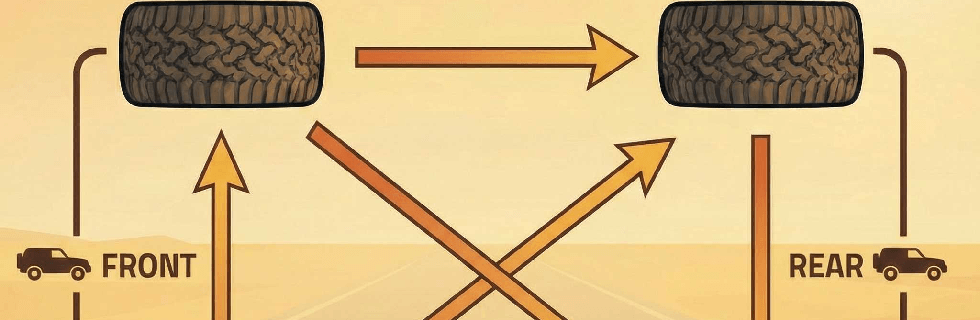
The forward cross tyre rotation pattern is commonly used for front-wheel drive vehicles, including many crossovers. The front tyres of the vehicle go straight to the rear axle, while the rear tyres move to the opposite front positions through diagonal movement. It is also a widely used tyre rotation pattern for cars with front-wheel drive.
-
Rearward Cross Tyre Rotation
Rearward cross rotation is suitable for rear-wheel drive vehicles, including some SUVs. The method involves rear tyres moving to the front axle while maintaining their original side position and front tyres moving to the rear axle through diagonal movement. Front-to-back tyre rotation pattern enables rear-wheel-drive SUVs to handle rear tyre wear, which occurs during acceleration.
-
X-Pattern Tyre Rotation
The X-pattern tyre rotation is often recommended for all-wheel drive and four-wheel drive vehicles. Each tyre moves diagonally across the vehicle, which means the front left tyre moves to the rear right and the front right tyre moves to the rear left. This tyre rotation pattern for 4x4 guarantees uniform wear on all tyres, as they use all tyres to generate power and traction.
-
Side-to-Side Rotation
Side-to-side rotation functions as a wheel movement method that helps vehicles that contain front and rear axle wheels with different tire sizes. The method requires tire movement from the left side of the vehicle to the right side while staying on the same wheel axle. The method is used in performance-focused SUVs and crossovers because their front and rear wheels maintain different size requirements.
-
5-Tyre Rotation
A full-size spare tyre comes standard with some SUVs. The 5-tyre rotation pattern provides for spare tyres to participate in the rotation process, which enables all five tyres to achieve equal wear throughout their usable period.
How Often Should You Rotate Your Tyres In Hot Climates?
Tyres need rotation every 10,000 kilometres or 6,000 miles in hot climates, based on the driver's driving patterns and the type of vehicle you operate. Drivers need to perform tyre rotation more often when:
- using vehicles for long drives at high speeds
- transporting substantial weights
- experiencing a humming sound when driving on smooth roads
Things To Consider When Rotating Tyres
When you rotate your tyres, you need to follow basic guidelines that help you achieve safe results through effective practices.
- Check the owner’s manual for the tyre rotation pattern diagram and guidelines for manufacturer recommendations.
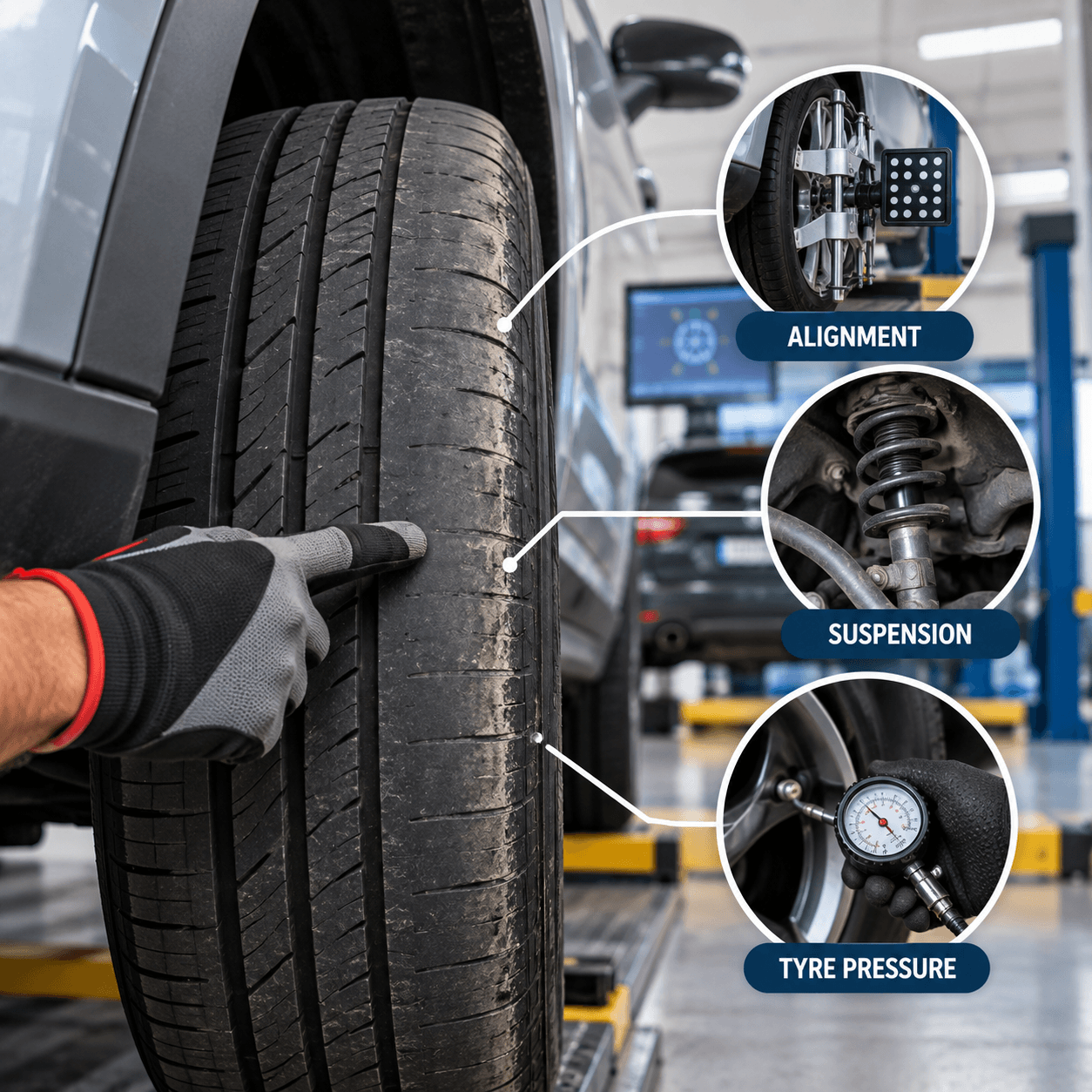
- Evaluate tread depth before performing rotation, because uneven wear shows the existence of alignment and suspension issues.
- Consider tyre type as it affects your rotation options because directional tyres require one-way movement, while non-directional tyres provide full rotation freedom.
- Along with regular tyre rotation, also consider regular tyre pressure monitoring, proper wheel alignment, and balancing.
- Consider professional assistance for correct and safe tyre rotation. Book your tyre rotation service at Dial A Tire today to ensure maximum tyre life and safety.
FAQs ?
Tyre rotation helps balance tread wear, but cannot fix problems caused by incorrect tyre pressure or wheel alignment.
Staggered fitment means the front and rear tyres are different sizes. The situation requires side-to-side tyre rotation because front and rear tyres need to remain in their respective positions.
Non-directional tyres of identical size should have their new tyres installed on the rear axle to enhance control and stability.
Tyre rotation and wheel alignment are separate services. The temporary vibration that occurs after rotation will resolve itself when tread wear reaches an even state.
Some drivers prefer to rotate their tyres themselves, while professional services provide correct tire rotation patterns together with necessary inspections and safety procedures. We at Dial A Tire provide expert tire rotation services to help your tires maintain optimal performance in high-temperature conditions.