
If your car has been parked for a few days or longer then you might feel a slight thumping when you start driving again. This is often the sign of flat spots on tyres. Though it seems concerning, it's temporary and fades as you drive. Knowing the causes and the symptoms of flat spots on tyres will help you act early.
What Are Flat Spots On Tyres?
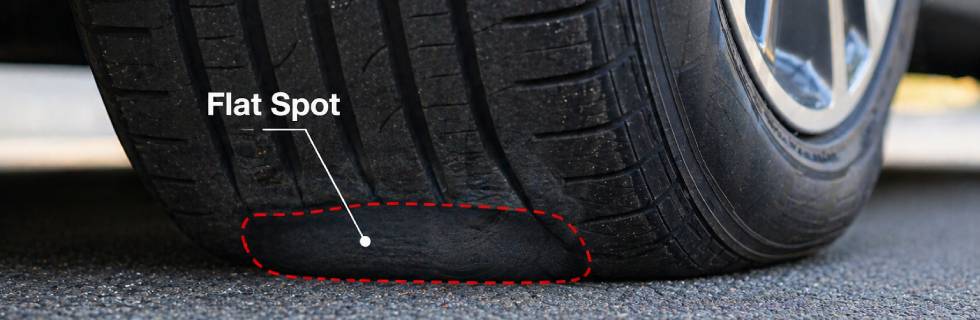
Flat spots on tyres are small areas where the tyre becomes slightly flat instead of perfectly round. It happens when a section of the tyre is pressed against the ground for an elongated period and carries the vehicle’s weight the whole time. Since the tyre is inactive, that section does not change position which leads to tyre flat spots. This affects the tyre’s shape and makes that area uneven with time.
Temporary Vs. Semi-Permanent Flat-Spotting
| Feature | Temporary Flat Spot | Semi-Permanent Flat Spot |
|---|---|---|
| Main Cause | Parked for a few days or weeks | Parked for a month or longer; hard braking |
| Visibility | Usually not visible | May show tread wear or scuffing |
| Vibration Pattern | Fades after a few kilometres | Continues or worsens with driving |
| Recovery | Resolves once tyres warm up | May need balancing or replacement |
| ABS Impact | Less likely to cause permanent damage | Braking-related spots unaffected by ABS |
| Common Scenario | Overnight cold parking, short trips | Winter storage, vehicle shipping |
5 Common Causes Of Flat Spots
Flat spots on tyres form due to everyday situations where the tyre stays under pressure for too long. So, what causes tyre flat spots?
-
Extreme Heat
Extreme heat plays a major role in the formation of flat spots on tyres. With road temperatures often exceeding 60°C, the tyre rubber softens significantly during driving. This softening makes the tyre more flexible and slightly more prone to deformation under the vehicle’s weight.
-
Prolonged Parking
When a car stays parked in the same spot for a long time then one part of the tyre holds the full weight of the vehicle. This inactivity for a prolonged time changes its shape and tyre flat spots can form. Longer parking and extra load make it more noticeable.
-
Overnight Cooling After Extreme Hea
When your car sits overnight, the temperature drops and the tyre rubber becomes a bit stiff. If a tyre was warm from driving earlier then it cools down in the same position and the slightly flattened area will harden. This is why morning tyre vibration feels more noticeable right after you start driving.
-
Underinflated Tyres
When a tyre does not have enough air then a larger part of it touches the ground. This extra contact makes the tyre softer and easier to lose shape under the car’s weight. This causes uneven wear and increases the chances of flat spots with time.
-
Low Quality Tyres
Budget tyres lose shape more easily under weight while high-performance tyres may also develop flat spots because their softer rubber focuses on grip. Tyres Brands like Michelin, Continental and Bridgestone use stronger designs to reduce this risk but extreme temperatures and ageing still make any tyre develop flat spots.
Symptoms Of Flat Spots On Tyres
Flat spots on tyres usually show up once you start driving even if they are not visible. Here are some symptoms to notice flat spots -
-
Vibrations
The most common sign is a slight shaking when you start driving which often feels in the steering or seat. It is usually more noticeable at low speeds and gradually reduces after a few minutes, especially in morning tyre vibration.
-
Thumping
You may notice a steady bump or light thud as the tyre turns caused by the flat section hitting the road again and again. It feels clearer on quiet roads, follows the wheel’s movement and usually fades as the tyre warms up.
-
Steering Control
Flat spots affect steering during the first few minutes of driving and makes it feel slightly stiff or uneven. This usually improves as the tyre warms up but if the issue continues then it’s best to get it checked.
-
Reduced Performance
Another symptom of flat spots is when your car feels less smooth or slightly unstable during the first few kilometres. Ride comfort drops for a short time and fuel efficiency may also dip slightly.
Why Does It Feel Worse In The Morning?
Car vibration after parking overnight is common and feels worse in the morning. When you stop driving at the end of the day then the tyres cool down and the rubber becomes harder. The part touching the ground stays slightly flattened while the car is parked.
When you start driving in the morning then that stiff, flattened portion rotates before it softens and creates vibration. Once you start driving then the tyres heat up and slowly return to their normal shape. In most cases, the vibration goes away within 15–20 minutes.
How To Prevent Tires From Flat Spotting?
If you think your tyre has a flat spot then it is best to get it checked by a professional centre like Dial A Tire. Our team will inspect the flat spot and may recommend the following:If you think your tyre has a flat spot then it is best to get it checked by a professional centre like Dial A Tire. Our team will inspect the flat spot and may recommend the following:
- Tyre Balancing & Alignment - This will help the tyres to rotate smoothly and do not put extra pressure at any particular area.
- Rotation - Changing tyre positions at regular intervals prevents one spot from taking too much load and helps maintain a more even tread.
- High-Quality Tyres - When the tyres are made with better compounds then they do not reform their shape under any pressure or temperature change.
- Park in Covered Areas - Temperature remains stable when the vehicle is parked in covered or indoor areas which slows down rubber hardening that prevents flat spots.
- Driving the Car - Driving regularly keeps tyres from staying in one position for too long and even short drives will reduce pressure buildup and keep the rubber flexible.
FAQs ?
Follow the proper prevention tips as shared above; keep tyres properly inflated and drive your car regularly. Good quality tyres, regular rotation and balancing checks further reduce the chances of flat spots forming.
If the vibration does not go away after 20–30 minutes of driving then get the tyres checked as the issue may be semi-permanent flat spots, wheel imbalance or another mechanical problem.
Over-inflating tyres is not a good solution as it reduces grip and leads to uneven wear. So it is always better to follow the pressure recommended by the vehicle manufacturer.
Driving for a short time is usually fine if the vibration disappears quickly but if it continues then it affects comfort and control which means a professional inspection is needed.
Flat spots do not always mean you need new tyres as temporary ones go away with driving. If the vibration stays or the tread looks uneven then replacing the tyre is a better option.