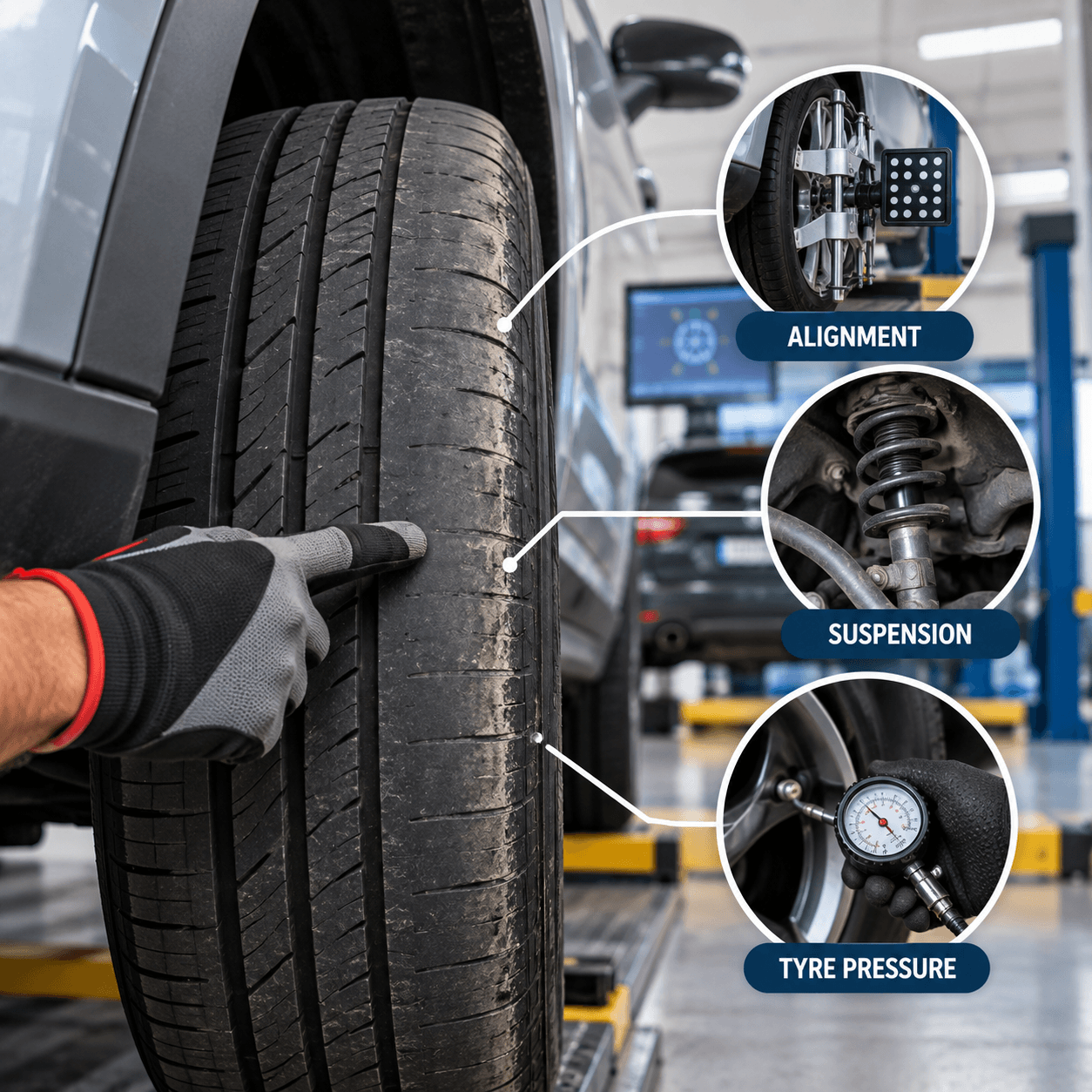

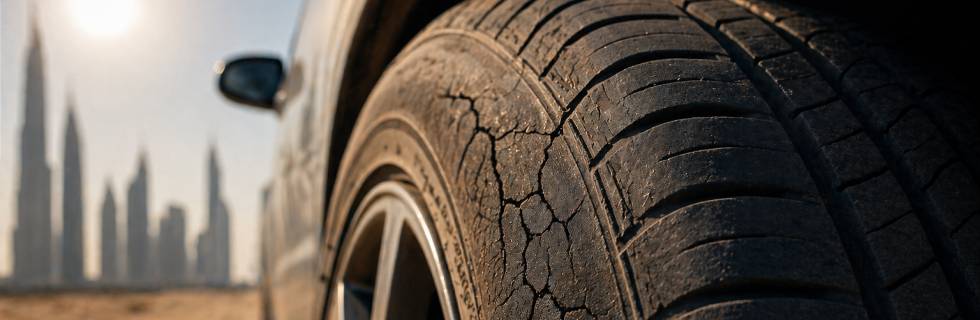
If you are experiencing tyre cracking in Dubai despite good tread depth, then it’s not surprising, since the heat, sunlight, and roads in the area wear out tyres at an accelerated pace, and this article will provide more insight into the real causes and necessary actions.
Common Tyre Cracking Issues in Dubai and How to Prevent Them
| Common Issue | Main Reason | Impact on Tyres | Preventive Measure |
|---|---|---|---|
| Tyre Sidewall Cracks | Continuous exposure to heat and UV rays dries out the rubber | Weak sidewalls and a higher risk of sudden failure | Park in the shade and check tyres regularly for early cracks |
| Tyre Dry Rot Dubai | Loss of natural oils due to extreme climate and chemical reactions | Rubber becomes brittle and starts breaking from the surface | Avoid harsh tyre cleaners and reduce long sun exposure |
| Uneven Tyre Cracking | Improper tyre pressure or wrong driving habits | Uneven wear and reduced tyre life | Maintain correct pressure and drive smoothly |
| Internal Tyre Damage | Driving on under-inflated tyres creates excess heat inside | Hidden structural weakness and possible blowouts | Check tyre pressure monthly and before long drives |
| Early Tyre Aging | Constant exposure to high temperatures and ozone in the air | Tyres become weak even with good tread depth | Replace tyres every 3–5 years in UAE conditions |
| Heat-Induced Tyre Failure | Driving long hours on hot roads without breaks | Sudden tyre burst due to pressure build-up | Take breaks during long drives to let the tyres cool down |
Why Do Tyres Crack In Dubai Despite Good Tread Depth
There are numerous factors that lead to tyres cracking UAE, and by knowing these reasons, you can maintain your tyres and prevent their premature replacement.
-
Extreme Heat
As road temperatures reach over 60°C during the summer season, causing the natural oils in the rubber compound to evaporate and turn it dry and brittle, and once the rubber loses its elasticity, microscopic cracks begin to form on the tyre walls.
-
Improper Tyre Pressure
An under-inflated tyre bends excessively and develops excessive internal heat, whereas an over-inflated tyre becomes rigid and fails to absorb the shock of the road surface; thus, developing tyre sidewall cracks.
-
High UV Exposure
High amounts of sunlight and ozone in the atmosphere trigger chemical reactions within the rubber material, resulting in cracks.
-
Chemical Reactions
Regular cleaning or polishing of tyres using strong products removes the outer layer and accelerates tyre dry rot Dubai.
-
Extended Parking In Sunlight
Regular parking of a vehicle in open spaces exposed to direct sunlight keeps the tyre heated from one side continuously, weakening the rubber on that side and causing cracks.
-
Road Condition And Driving Habits
Constant driving on the hot highways, rugged surfaces, or sandy areas, along with abrupt braking, rapid cornering, and congested roads, increases pressure on tyres, accelerating their degradation and causing cracking.
-
Overload Vehicle
If you overload your vehicle with weight, the tyres will be exposed to additional heat and pressure that will cause deterioration of their structure, leading to early cracking.
Risks Of Tyres Cracking UAE
It may appear minor, but it is always advisable to check cracked tyres because they can pose great dangers, especially while driving at high speeds.
- Cracks make the tyre weaker, and since there will be additional heat build-up when you are driving, the tyre may burst suddenly.
- In Dubai, heat creates additional pressure in tyres, and once the tyres dry rot, they can burst suddenly.
- If a tyre blows out while driving at a fast pace, then the driver may have a lack of control over the car, which may cause an accident and serious harm.
- In some cases, cracks do not appear only on the surface, but there may be some damage inside the tyre, causing a safety risk.
- Tyres with cracks cannot have proper contact with the road, causing the car’s brakes to become less efficient and increasing the stopping distance.
- Driving with cracked tyres will cost you a fine, as well as black points for your driving license, and the car could also be impounded because of vehicle inspection failures.
How To Protect Your Tyres From Cracking In Dubai?
Some easy tips can be very effective in avoiding damage to your tyres and prolonging their life.
- Having regular checks for tyre inflation helps you save the tyre from getting too much strain, preventing it from tyre cracking Dubai.
- Park your car in shady areas or at least under covered parking, since exposure to the sunlight causes tyres to become dry and crack.
- The application of reflective coverings on windscreens reduces the overall temperature in the vehicle and protects the tyres from excessive heat.
- It is advised that when driving in hot summer conditions for long intervals, stop at regular intervals to allow the tyres to cool off, thereby avoiding heat damage.
- Inspect your tyres regularly for any sign of cracks or bulging, as early diagnosis of tyre sidewall cracks enables you to fix the problem sooner.
- Keeping the load weight under the suggested limit prevents undue stress on tyres and reduces the risk of tyre cracking.
- Avoid frequent cleaning and polishing of your tyres with harsh chemicals to enhance your tyre life.
When Is It Time to Change Tyres In Dubai?
As soon as your tyre tread gets down to less than 1.6 millimeters in thickness, it should be changed, since it becomes too thin to grip. Also, whenever there are any signs of damage in the form of cracks, bulges, and cuts on your tyres or sidewalls, it is high time to change your tyres to prevent any accidents.
If you experience shaking, your tyres either have some internal problems or have uneven tread depth, and also, if your tyres are older than three or five years, it is better to get them changed.
Dial-A-Tire offers fast inspections and efficient tyre replacements from the comfort of your own home. If you notice even minor cracks, it’s best to get them checked before they turn into a bigger problem.
FAQs ?
This occurs because the harsh Dubai weather and UV light dehydrate the rubber, taking away its oil content, and this results in sidewall cracks in tires even before the tread wears off.
In Dubai, typically tires last for about 3 to 5 years due to accelerated rubber degradation caused by the extreme heat in Dubai.
Parking cars directly under the sun exposes them to direct sunlight and hence causes excessive dehydration of the rubber, resulting in premature cracking.
Low tire pressure makes the tires bend while driving, causing excess heat to build up and damage the rubber and eventually crack.
Yes, because cracks show that the rubber is no longer strong, and deeper cracks can lead to tyre failure even if the tread looks fine.