
Car AC is not just a luxury but a necessity in the hot climatic conditions of the UAE, and a minor issue can turn into a catastrophic failure, making your complete drive a big hassle. The early signs of system failure due to extreme equipment stress begin with reduced airflow and warm air from the AC system. These simple car air conditioning problems can develop into costly compressor breakdowns and electrical system failures.
The only method to protect your financial resources and maintain your comfort requires immediate action against car AC problems. In this blog, we will discuss how ignoring minor AC issues can lead to major system failures and preventive measures to avoid AC issues.
Understanding Your Car’s AC Components
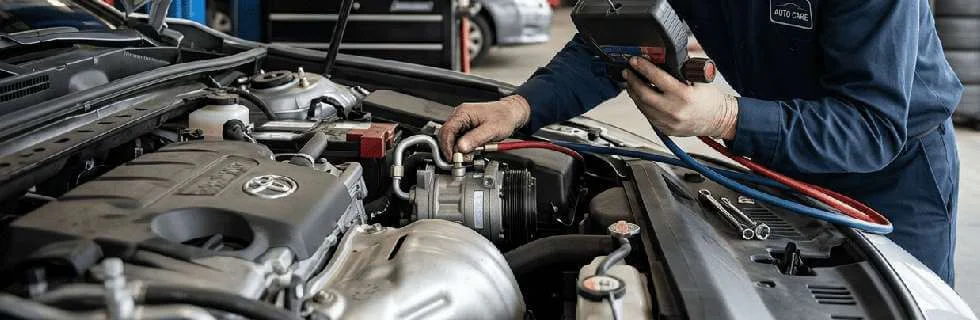
The "Big Three" components of an AC system enable cooling and serve as essential components
- The Compressor: The compressor functions to compress refrigerant while directing the refrigerant throughout the system. The complete cooling operation ceases when the compressor experiences failure.
- The Condenser: Located at the front of the radiator, it releases heat from the refrigerant. The system cannot release heat to the environment when its components become obstructed, which results in system overheating.
- The Evaporator: Situated inside the cabin, it absorbs heat from the interior air. The actual process of cooling air occurs at this location, which sends cooled air directly to your face.
Supporting parts like the receiver-dryer and expansion valve manage moisture and flow. The system operates efficiently when all components work together. The whole system breaks down when any one of these components fails.
Common Car AC Problems You Should Never Ignore
Your AC gives some warning signs before complete failure occurs and experiences total breakdowns when its warning signs are neglected during their initial stages.
- Refrigerant Leaks: If you spot oily residue on hoses, you likely have a leaking air conditioner unit. The car air conditioning system loses its cooling capacity when refrigerant levels decrease from their normal operating point.
- Worn Belts and Hoses: The system experiences improper airflow because loose or cracked belts create gap openings in the system. This is many times the first physical sign of a developing car AC problem.
- Electrical Faults: The system stops working immediately because blown fuses cut off power. Your aircon not working car symptoms include a total lack of power to the fans.
- Clogged Cabin Filters: A filter choked with dust restricts airflow, making a healthy system feel weak and sluggish.
- Odd Odors: A musty smell points to mold, but a burning smell from air conditioner vents is a red alert for electrical shorts or seized bearings.
Key Warning Signs To Act On Immediately
If you witness any of the below warning signs, take professional help immediately.
| Warning Sign | Potential Meaning |
|---|---|
| Weak or Warm Air | Low refrigerant or a dying compressor. |
| Grinding/Rattling Noises | Worn bearings or a failing compressor clutch. |
| Foul or Musty Odors | Bacteria in the evaporator or a blocked drain line. |
| Water Inside the Cabin | Clogged condensate drains leaking into the floorboards. |
| Oily Film on Fittings | Active refrigerant and lubricant leakage. |
The Hidden Danger: Potential System Damage
Not only does a malfunctioning AC make you sweat, but it also puts other parts of your car at risk.
-
Electrical & Component Stress
If your AC compressor is malfunctioning, it will overheat. This overheating can cause the wires connected to the compressor to melt, leading to short circuits. In addition, the AC system may blow fuses that are connected to other important components.
-
Alternator & Battery Stress
The alternator is forced to work harder than usual to charge the AC clutch and the AC fan, which are both malfunctioning. This overuse of the alternator will reduce its lifespan and may even drain your battery , leading to problems with your car’s starter.
-
Computer Module Risk
In the worst possible scenario, the AC clutch may overheat and cause voltage spikes. These spikes are risky for the computer module, which is responsible for controlling other important components of your car.
The Benefits of Immediate AC Repair
Fixing a car AC problem today can save you a lot of hassle tomorrow.
- Prevents Total Failure: Fixing a leaking air conditioner unit today keeps the compressor lubricated. Without oil in the refrigerant, the compressor will seize.
- Safety and Health: High cabin temperatures lead to driver fatigue and dehydration. AC is a safety requirement, especially when carrying children and/or elderly passengers.
- Fuel Efficiency: A malfunctioning AC creates a massive "parasitic load" on the car's engine. Fixing a car ac not cooling problem today lets you drive with a freely running engine, saving you money on gas.
- Resale Value: A functioning AC is a major selling point. Fixing and maintaining a car's AC is a long-term investment in its resale value.
- Odd Odors: A musty smell points to mold, but a burning smell from air conditioner vents is a red alert for electrical shorts or seized bearings.
Preventive Measures To Stay Cool
These preventive measures will not only save you from any hassles but will also be pocket-friendly for you.
- Run it Regularly: Even during winter seasons, it is good to run your aircon for ten minutes every week to keep your seals well-lubricated to avoid leaks.
- Filter Changes: It is good to change your cabin air filter every 15,000 to 20,000 miles to ensure proper air flow.
- Check Levels: If you feel that your car is losing performance, it is good to check your aircon refrigerant level before your compressor is damaged.
- Proper Shutdown: It is good to turn off your AC button a minute before turning off your car engine to dry out your evaporator to avoid "startup shock" on your compressor.
If there is a burning smell emanating from the air conditioner vents, it means there is a slipping drive belt and/or an electrical part overheating. It is therefore necessary to switch off this system as it can cause a fire.