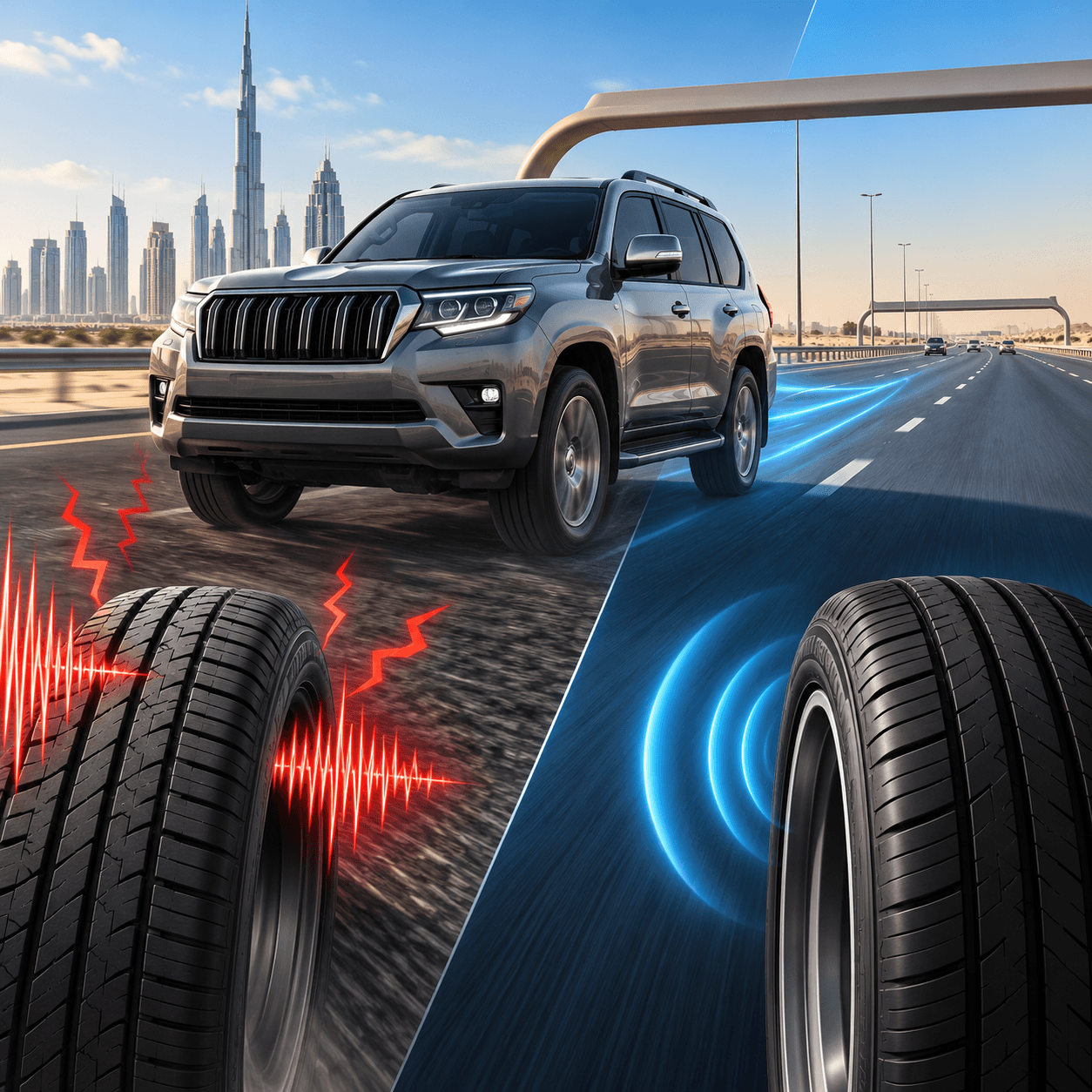

When you press the brake pedal, your vehicle continues moving for a short distance before coming to a complete stop. This gap between hitting the pedal and coming to a complete standstill is called braking distance.
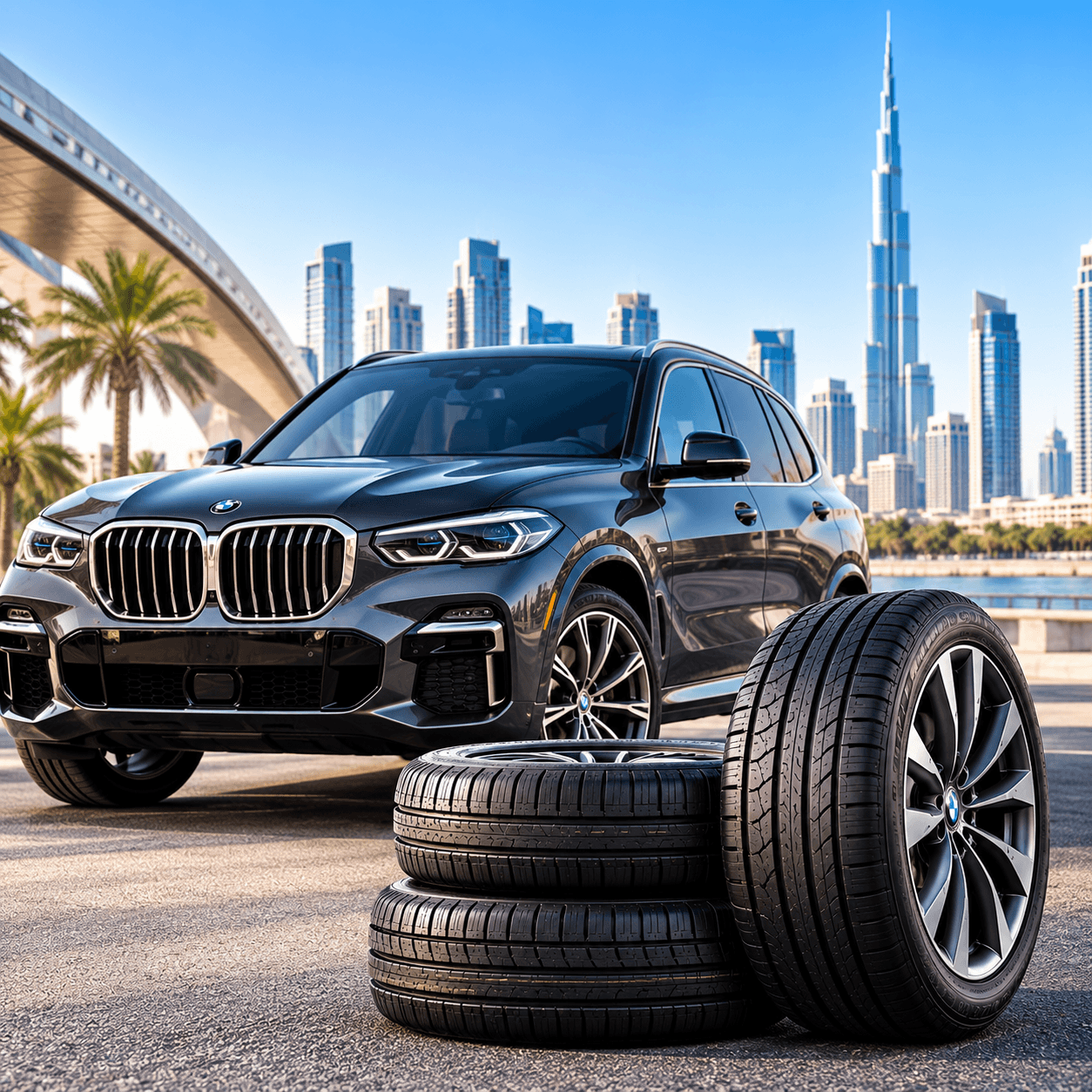
Tyres play a critical role here, especially on the hot roads of the UAE. But in high temperatures, do budget tyres and premium tyres stop the same way? Or does the difference matter more than most drivers think? This guide breaks down the truth about budget vs premium tyres.
What Is Braking Distance?
Braking distance is how far your car moves after you press the brakes. If you are driving fast then your car needs more distance to stop completely. When you brake then the tyres hold the surface and slow the car down.
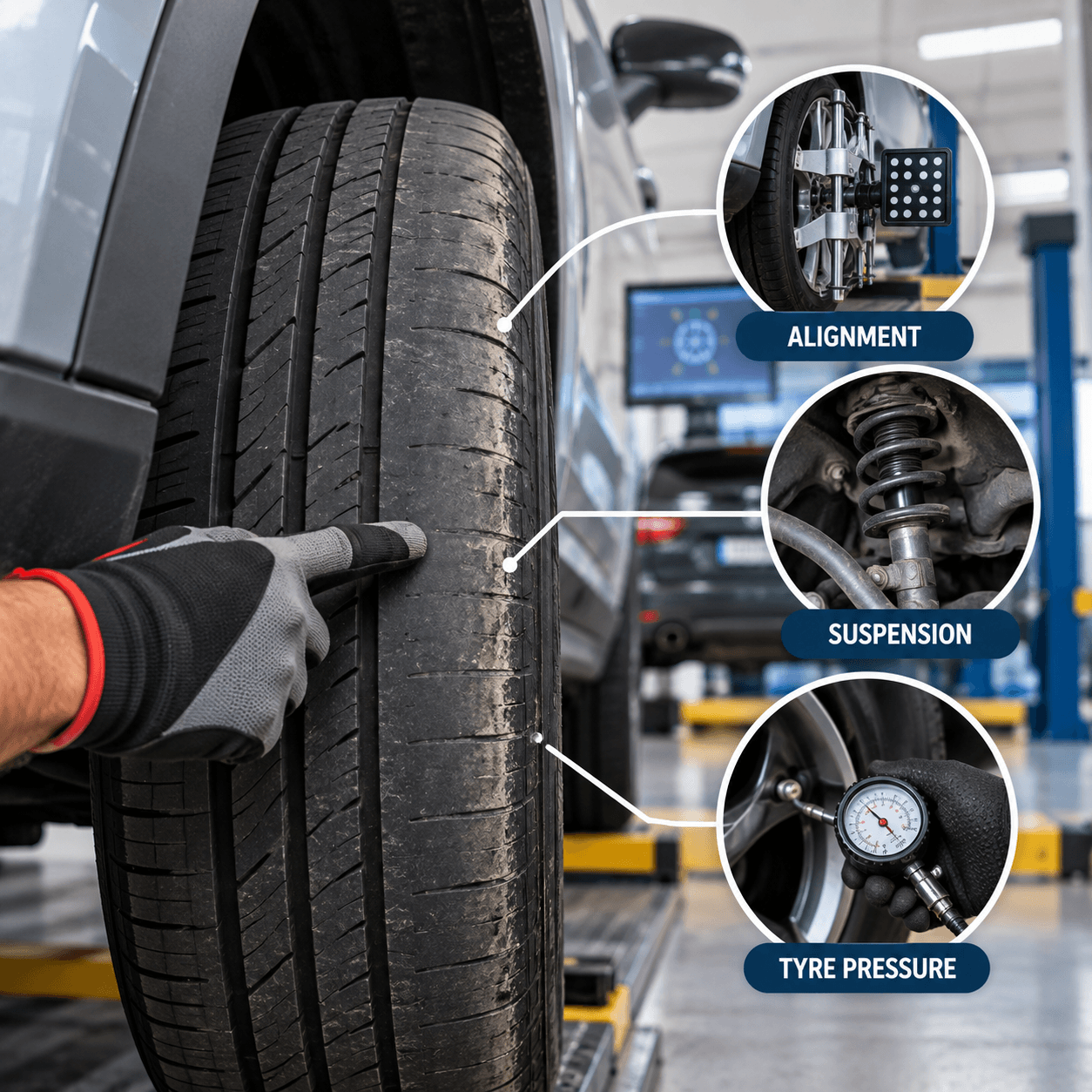
Road heat, rubber quality, air pressure and tread depth all affect how well they grip. Now let’s see how heat changes this grip and which tyres work better on hot roads.
Why Tyre Compound Matters More Than Price
Many drivers focus on cost, but the rubber compound matters more than the price tag.
Tyre compound refers to the blend of materials used to make the rubber. Some tyres use simpler blends whereas others use advanced mixtures designed for high heat.
Lower-cost models often rely more on carbon black with less silica. This mix may handle daily driving fine but may lose flexibility faster in high temperatures.
Premium options usually include higher silica content and special additives. These materials help the tyre stay stable even when roads are burning hot.
So the real debate in economy tyres vs premium tyres is not just about money but how the rubber reacts to heat.
The Role of Heat on Tyres
In any budget tyres comparison, heat response is crucial. High temperatures change how tyres behave.
-
Reduced Grip
High temperatures soften rubber and when rubber becomes too soft then it may struggle to hold the road firmly. Budget tyres lose traction more quickly on smooth or slightly dusty surfaces. During sudden braking, this softer feel may increase stopping distance.
-
Pressure Changes
As road temperature climbs, the air inside tyres expands which raises internal pressure. When pressure becomes too high then the tyre’s contact patch shrinks leading to weaker grip.
-
Compound Quality
Budget tyres often use simpler rubber blends and over long exposure to heat, that material may harden, crack or wear unevenly. Premium tyres are designed to perform in high temperatures as their advanced compounds resist breakdown better.
Budget Tyres On Hot Roads
Budget tyres are suitable for moderate city driving. However, their limits become more visible in extreme heat.
-
Emergency Braking Performance
During sudden stops, grip strength matters. Budget tyres may take a few extra meters to bring the car to a halt. That difference might seem small but in real traffic it decides whether you stop safely or hit the vehicle ahead.
-
High-Speed Stability
At highway speeds, tyres face more stress. In intense heat, cheaper rubber may feel slightly less stable. Steering response can become less sharp, especially during quick lane changes.
-
Heat Degradation Over Time
Constant heat makes tyres wear out faster and the rubber become hard or lose its flexibility. Over time, performance slowly reduces and drivers often notice only when the car takes longer to stop.
-
Fuel Efficiency Impact
Rolling resistance affects fuel use and some budget tyres create slightly higher resistance, especially as they age. That can increase fuel consumption although the difference may not appear dramatic at first, over time it adds up. When looking at tyre fuel efficiency comparison, short-term savings sometimes lead to higher long-term costs.
Premium Tyres on Hot Roads
Premium tyres use advanced engineering and materials designed for heat resistance.
-
Emergency Braking Performance
Premium tyres usually offer better grip in high heat. When you press the brake hard, the car often stops in a shorter distance and feels more stable compared to many economy tyres.
-
High-Speed Stability
At highway speeds, advanced tread patterns help maintain balance. Even when road temperature rises sharply, steering remains steady. Drivers often describe the feeling as more confident.
-
Heat Resistance & Compound Technology
High-silica compounds resist breakdown better. These materials handle extreme surface temperatures without losing structure quickly. Instead of hardening unevenly, they maintain flexibility longer. This premium technology is especially designed for climates like the UAE.
-
Tyre Fuel Efficiency Comparison
Many premium tyres reduce rolling resistance and lower resistance means the engine works slightly less to keep the car moving. Over long distances, this improves mileage and a proper tyre fuel efficiency comparison often shows measurable savings.
-
Longevity & Wear
Premium tyres wear more evenly as their compounds resist cracking from heat exposure. While purchase cost is higher, replacement cycles are often longer. That changes the overall value equation.
Budget vs Premium Tyres Comparison
| Feature | Budget-Friendly Tyres | Premium Tyres |
|---|---|---|
| Braking Distance in Heat | Longer stopping distance | Shorter stopping distance |
| Grip on Hot Roads | Basic grip in high temperatures | Strong grip even in extreme heat |
| Emergency Braking Control | May feel less stable | Feels more controlled and confident |
| High-Speed Stability | Moderate stability at highway speeds | Better balance and stability at high speeds |
| Heat Resistance | Rubber may wear faster in summer | Designed to handle high temperatures |
| Fuel Efficiency | Have slightly higher rolling resistance | Designed for better fuel efficiency |
| Overall Safety in Summer | Suitable for light driving | Better for daily highway and long-distance driving |
How Dial A Tire Helps You Choose Safely?
Choosing between budget vs premium tyres can be confusing.
At Dial A Tire, recommendations are based on your driving style, vehicle type, and UAE climate conditions. Only genuine tyre brands suitable for high temperatures are suggested, with professional mobile fitting for proper installation.
You should check tyre size, traction needs, load and speed rating, tread pattern, and temperature performance before replacing tyres.Budget tyres are not unsafe but extreme heat affects their rubber more quickly. In high-speed or emergency situations, their grip may not match the performance of premium tyres designed for hot climates.