
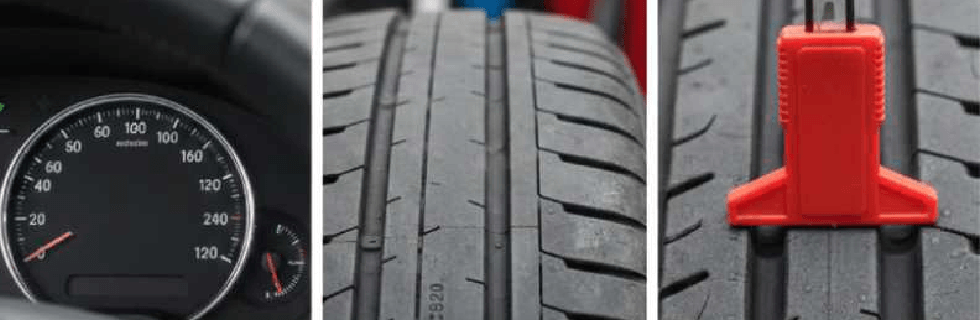
Tyres do much more than just help your car move; they are responsible for the safety, driving comfort, fuel efficiency, and overall vehicle handling capabilities. Drivers who know the optimal times to change their tyres will experience fewer vehicle breakdowns and accidents.
Knowing when to replace car tyres can help prevent accidents, improve vehicle performance, and save money in the long run. In this blog, we will discover various signs of tyre replacement and a few tips to maintain tyres for longevity.
Importance Of Timely Tyre Replacement
The timely replacement of tyres is very important, and here are a few reasons why you should get your tyres replaced in a timely manner.
-
Safety First
Tyres play a direct role in keeping your car stable on the road. Worn tyres lose road grip, increase braking distance, and make skidding more likely even if the brakes are in good condition.
Also, tyres lose their rubber strength as they age, which can result in high-speed sudden blowouts. All these situations demand the immediate replacement of tyres for your safety.
-
Fuel Efficiency & Money-Saving
If tyres are not replaced on time, they can be a huge blow to fuel efficiency and money savings. If the tyres are worn out, their rolling resistance increases, making the engine need additional power to propel the vehicle.
This results in higher fuel usage, which decreases its mileage. Proper tyre maintenance through the replacement of worn-out tyres will result in better fuel efficiency and decreased fuel costs for regular driving.
-
Smoother & Better Driving Experience
Good tyres improve ride comfort by reducing vibrations and road noise. The new tyres improve vehicle control through better handling performance and faster braking, which lets drivers handle corners with better control.
-
Environmental & Legal Compliance
The tread depth limit in the UAE is 1.6mm, which makes it illegal and unsafe to drive with tyres that fall below this measurement.
Also, the drivers with a poor tyre maintenance record have higher fuel consumption, which results in increased carbon emissions. Timely tyre replacement helps you maintain legally required standards while demonstrating your commitment to environmental protection.
When Should You Replace Tyres?
The following are the warning signs you need to replace tyres, so be very attentive, and if you see any of these signs, act immediately:
-
Worn-Out Tyre Tread
The most obvious indication that you must replace your tyres is worn-out tread. The road grip of tyres diminishes as their grooves become shallower. Most tyres have tread wear indicators that show when the tread has reached an unsafe level. Drivers need to replace their tyres when the tread depth reaches 1.6 mm or when it contacts the tread wear indicators.
-
Wheel Alignment And Wheel Balancing Issues
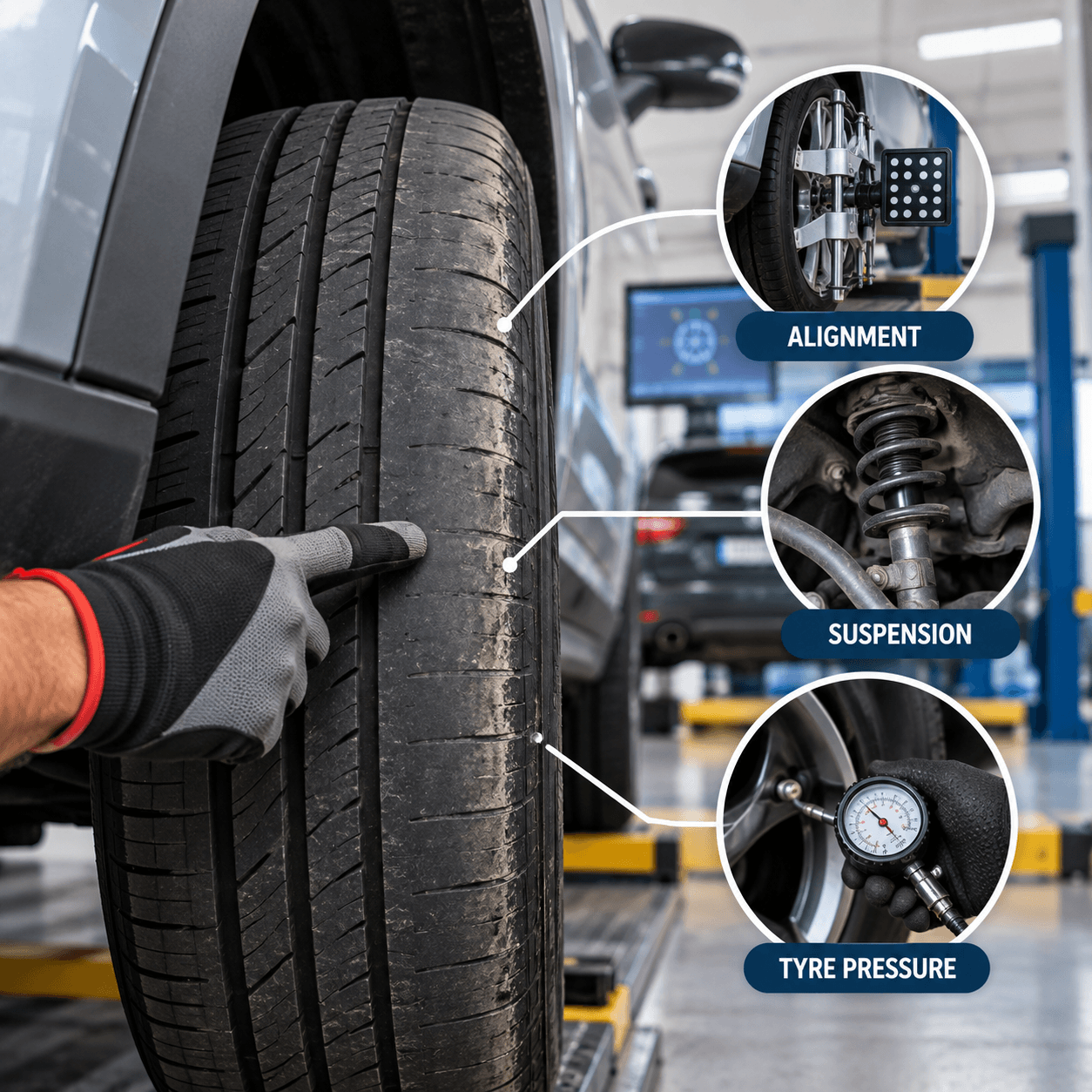
The problems of wheel alignment and wheel balancing create the condition of uneven tyre wear, which often leads to uneven tyre wear signs. Misaligned wheels cause tyres to wear more on one side, while poor balancing creates vibration and stress on the tyre structure. If tyres have already been damaged due to these issues, replacing them becomes necessary to avoid repeated wear and unsafe handling.
-
Reduced Braking Efficiency
Your car requires more time to stop because the braking power has decreased due to your tyres wearing down. The tyres lose their grip because of their aging process, which results in longer braking distances. Driving with reduced braking efficiency creates dangerous conditions that become even more hazardous at higher speeds, making tyre replacement necessary.
-
Frequent Punctures
The occurrence of frequent punctures demonstrates that the tyre structure has experienced significant damage. The rubber compound of tyres deteriorates with age, which allows small objects to penetrate through the material and cause damage. When a car experiences frequent tyre punctures, drivers should replace their tyres to prevent sudden failures that occur during driving.
-
Damaged Sidewalls
The sidewalls of tyres provide structural support while they shield the tyre from damage. The presence of cracked tyre sidewalls together with visible bulges and cuts indicates that the tyre has suffered major internal destruction. The damaged sidewalls of tyres present a higher risk for blowouts, which makes it necessary to replace all tyres that show this defect.
-
End Of Life
The mileage rating of each tyre specifies the duration for which the tyre will remain functional. The performance and safety of tyres deteriorate after they reach their specified mileage limit. The process of replacing tyres at their end of life helps prevent both sudden breakdowns and dangerous driving conditions.
-
Tyre Age
Tyres need replacement after six years, even if their tread shows no signs of deterioration. The age of a tyre determines its replacement schedule because older tyres have a higher risk of developing cracks and experiencing blowouts.
Tyre Replacement Checklist
Tips To Achieve An Extended Lifespan For Car Tyres
Proper tyre maintenance helps extend tyre life and maintain performance.
-
Regular Inspections
Regular visual checks help identify uneven tyre wear signs, cracks, bulges, or air pressure issues early. Correct tyre pressure maintenance directs tyre wear while enhancing fuel economy.
-
Rotating Tyres
The process of rotating tyres needs to be done at regular intervals because it helps to distribute wear across all tyres. This method increases tyre longevity while sustaining proper vehicle handling.
-
Tyre Alignment And Balancing
Proper alignment and balancing will stop wheels from wearing unevenly while eliminating all vibration problems and steering difficulties. Regular checks help maintain smooth driving and extend tyre life.
FAQs ?
You should replace tyres when tread depth falls below safe limits, uneven wear signs appear, sidewalls show cracks or bulges, punctures become frequent, or the tyre age exceeds six years.
You should check tyre size, traction needs, load and speed rating, tread pattern, and temperature performance before replacing tyres.
You can buy tyres online and get them fitted at home with our mobile installation service, which saves time and effort.
All four tyres need replacement for balanced handling, but one tyre can be replaced if it matches the other tyres.
Using tyres beyond the recommended age is not advised, even if tread looks fine, as rubber hardens over time and increases the risk of cracks and blowouts.